Select
FTC
Efficient App laurels

11 Best AI Tools in 2026

Updated May 7, 2026

See how our top 11 picks compare across the 11 AI tools we evaluated.

Explore what each does best, where it falls short, and why it earned a spot on our 2026 list.

Alex Bass Headshot
Alex Bass
Andra Vomir Headshot
Andra Vomir

    Best AI Tools at a Glance

    11 apps and 10 deals
  1. Granola
    Granola

    Best virtual and in-person AI note taker

    Best virtual and in-person AI note taker
  2. Wispr Flow
    Wispr Flow

    Best accurate AI voice dictation

    Best accurate AI voice dictation
  3. ChatGPT
    ChatGPT

    Best overall AI chat app

    Best overall AI chat app
  4. Claude
    Claude

    Best for thoughtful reasoning and execution

    Best for thoughtful reasoning and execution
  5. Superhuman Mail
    Superhuman Mail

    AI email client

    AI email client
  6. Kick
    Kick

    Best AI accounting & bookkeeping

    Best AI accounting & bookkeeping
  7. Littlebird
    Littlebird

    Best for context-aware recall

    Best for context-aware recall
  8. Supercut
    Supercut

    Best AI video messaging tool

    Best AI video messaging tool
  9. OpenAI
    OpenAI

    Best API for AI access

    Best API for AI access
  10. Motion
    Motion

    Best AI project management for small-mid-size teams

    Best AI project management for small-mid-size teams
  11. Perplexity
    Perplexity

    Best for researching, whether work, student, or personal

    Best for researching, whether work, student, or personal
Watch the Full Breakdown

Watch the Full Breakdown

Best AI Tools Ranked & Reviewed

Watch our full breakdown of the top AI tools, how they performed in testing, and what makes each one worth considering

Recorded by our expert reviewers
Alex
and
Andra
Independent, hands-on testing.Learn more

How We Evaluate AI Tools

We score each AI tool across multiple criteria, and hands-on expert evaluation

  • No Category Criteria records assigned to this category yet.
  • Expert Evaluation
    Curated by
    Alex
    and
    Andra
    , our rankings reflect in-depth testing, industry insights, and hands-on experience.
1
Granola

Granola

Best virtual and in-person AI note taker

Best virtual and in-person AI note taker

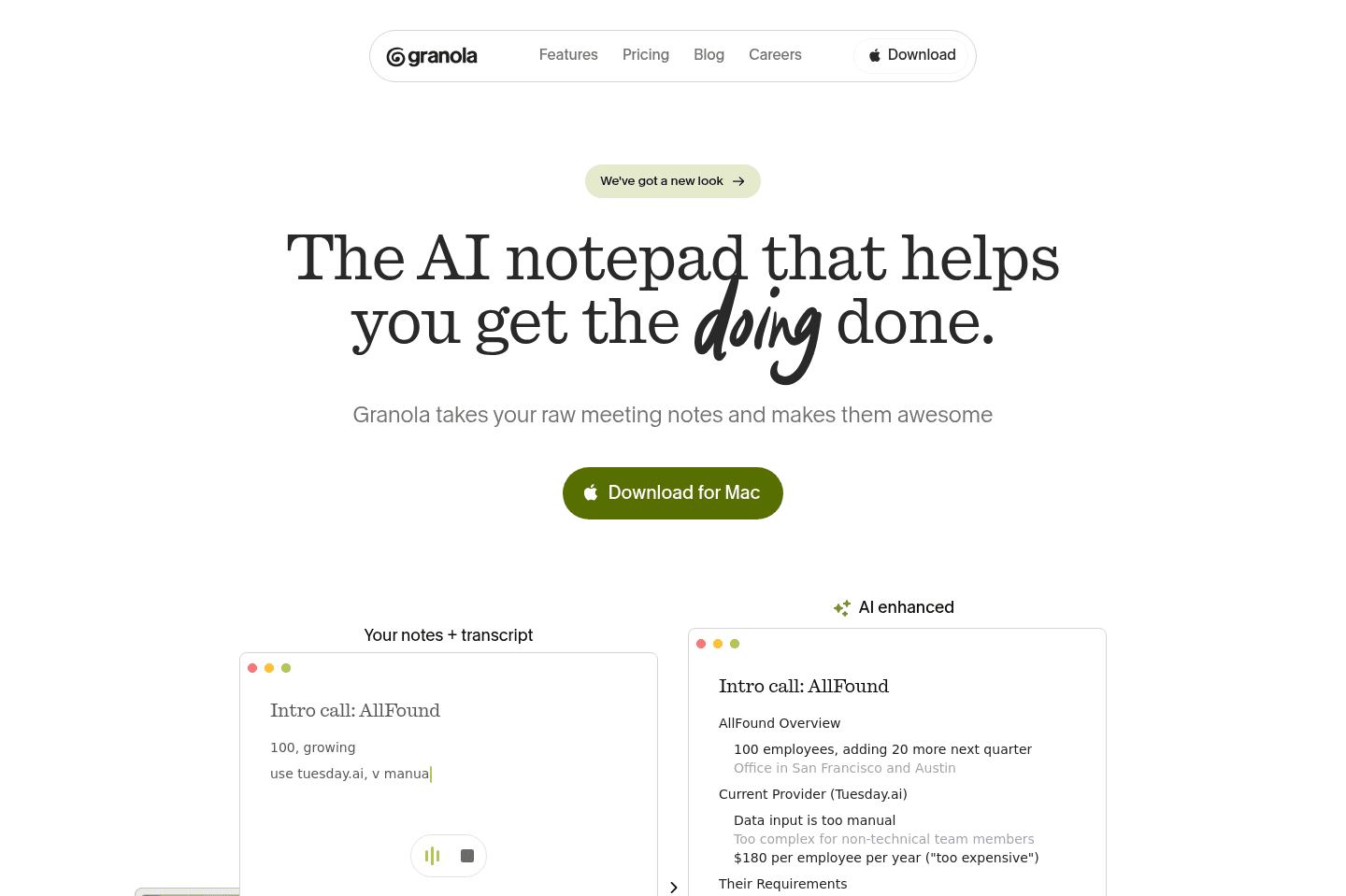
Granola is a meeting recorder tool that doesn't require those annoying bots to join. In-fact the people you're on the call with don't even have to know you're using it. It then transcribes and organizes notes for you.

I typically find myself saying "I'm just going to take notes, and by that I mean turn on Granola."

We have a rule at Efficient App: if Granola wasn't there, it didn't happen, we use it at least 3-5 times a day and love it.

Granola
Go to Granola site

What is Granola?

What is Granola?

Granola is a meeting recorder tool that doesn't require those annoying bots to join. In-fact the people you're on the call with don't even have to know you're using it.

Interestingly enough, this isn't any different than just having a note taker on the call, because they don't allow you to playback the audio. What you can do is ask Granola's AI Chatbot questions about the call, or any calls you've had across the company.

You can even ask Granola questions mid-call, which uses full context of the call up to that point, or can even come up with contextual questions to ask to help the conversation flowing. It's really as if you have an active note taking assistant on the call alongside you, helping you keep the conversation flowing, and researching further context details when needed.

We make sure to always have Granola recording our meetings (even in-person team meetings and brainstorming meetings), even if we have one of the best AI note taker bots joining the call as well. It's just a more lightweight solution that can't be kicked from calls and is less invasive.

Pros and Cons

Pros and Cons

Pros

Pros
  • Incredibly easy to use
  • AI notes save a lot of cleanup after calls
  • Records more than just scheduled meetings
  • Less invasive than meeting bots that join calls
  • Full transcripts are searchable and actually useful
  • You can add your own notes and Granola will build around them
  • Great for founders and small teams documenting ideas, meetings, and processes

Cons

Cons
  • iOS only right now (Android coming soon)
  • Integrations are limited
  • No audio or video recording (if you care about that)

Key Features

Key Features

Background Recording

Background Recording

This is the first thing that made Granola click for us. When we use meeting bots, there's usually friction involved. They have to join your call and announce itself, and sometimes they accidentally get kicked out. Granola is just always available. You bring it up, you click record, and you can go. It'll just sit quietly in the background and record your transcript. The whole thing just feels way lighter and way less invasive.

We still use meeting bots when we need full recordings, but day to day, Granola's what actually gets used.

Capture Everything

Capture Everything

When we first started using Granola, it was for scheduled meetings, but then we started using it for in-person meetings and chats.

Just the other day, Alex and I were out on a walk when we started brainstorming. I literally paused to pull out Granola so we could start recording our conversation. Later, I took those notes and dropped them into AI to quickly turn them into a deck for a team presentation.

And that's exactly why we always say, "If it's not in granola, it didn't happen!"

Transcription + Notes

Transcription + Notes

Granola transcribes everything everyone says, live, word for word, and then turns it into organized notes once I hit Generate Notes. And I love that it still gives me the full transcript too. It's really useful for when I need to pull exact quotes or check on what was actually said, or if I need to go back and drop parts of the conversation into a document later.

We also really like that Granola's AI doesn't take too much control away from you. I always pop in notes while a meeting is happening, and Granola builds around them instead of replacing them. So your final notes still feel like your notes, just way more organized.

AI Assistant

AI Assistant

The AI here is actually useful. The AI assistant in Granola has actually saved me a couple of times. Sometimes during a meeting, I might need to pop out for a couple of seconds, and instead of having to interrupt everyone and play catch-up, I can just pop into Granola's chat and ask, "What did I miss?" and it'll give me a quick recap. That's the kind of thing that is genuinely helpful.

Integrations

Integrations

Granola watches your calendar for meetings or even Slack huddles, and it'll pop up when a meeting starts and ask if you want to record. It's a nice little nudge that makes a huge difference because it's one less thing to remember.

Where we still feel the gap is deeper integrations. The big one we want is Linear. We'd love to finish an engineering call and have Granola recommend tickets or push action items somewhere useful without us having to manually copy and paste everything over. Right now, you can still ask the AI what tickets it would recommend, which is helpful, but it's not as proactive as we'd like.

Pricing

Pricing
  • Basic: $0 per month. Best for individuals who want to try Granola and see if it fits into their workflow before committing.
  • Business: $14/user/mo. Best for individuals or small teams who want unlimited meetings and collaboration within a shared space.
  • Enterprise: $35/user/mo. Best for larger teams that need more admin permissions and privacy control options.
Subscribe for updates

Get the latest rankings and insights on top AI apps—delivered to your inbox. Stay ahead with our expert picks and updates.

2
Wispr Flow

Wispr Flow

Best accurate AI voice dictation

Best accurate AI voice dictation

We've been trying dictation tools for years, and Wispr Flow is the first one that actually worked reliably enough for us to keep using every single day.

Press a button, speak, and it'll use AI to write out clean text across Slack, texts, email (anywhere). I even use it for fast content writing or when I'm talking to AI. At this point, it feels like one of those tools where, if it disappeared, I'd be massively annoyed. If you spend a big chunk of your day writing or typing, definitely give it a shot. This is the future.

Wispr Flow
Go to Wispr Flow site

What is Wispr Flow?

What is Wispr Flow?

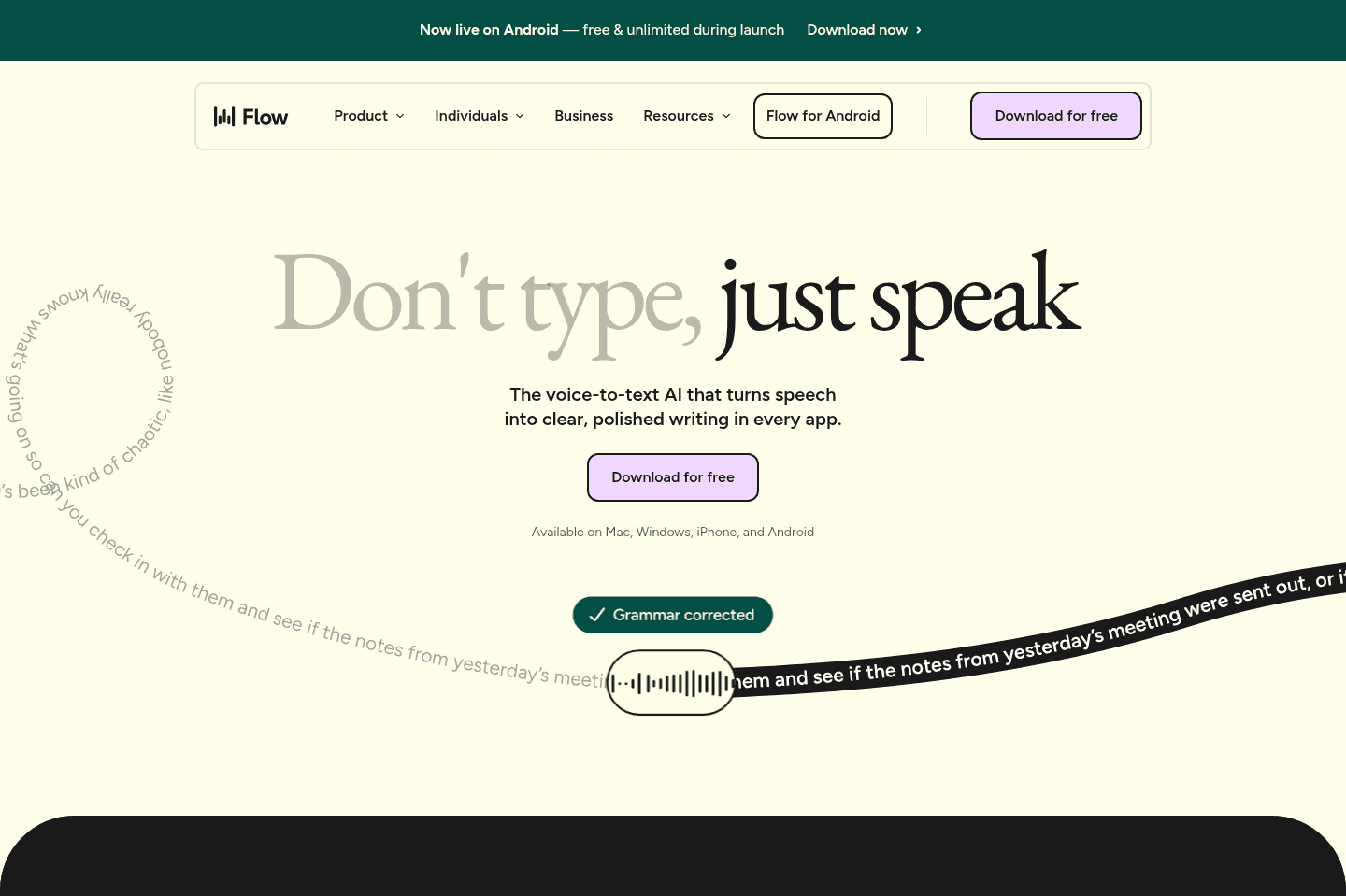
Wispr Flow is an AI dictation tool that works anywhere you can type. Speaking a paragraph is faster than writing a paragraph. Which sounds obvious, but most dictation tools have been so annoying and unreliable that I never actually changed how I worked because of them. Wispr Flow was the first one where I thought, "Oh, okay, this is actually faster."

I use it everywhere now. Slack, Instagram, review drafts, and random thoughts I need to get out fast. I hit my keyboard shortcut, talk, and it gives me clean text, so I can keep moving instead of stopping to fix every other sentence. That's the whole reason it stuck.

That reliability is the whole point. I tried other tools for years, and the pattern was always the same: I'd start dictating, it would miss half of what I said, and I'd end up repeating myself until I gave up. If a dictation tool makes you repeat yourself all day, you are not going to use it. The only way they're going to succeed is if it works flawlessly, and with Wispr Flow, it works pretty damn close to flawlessly on every device.

One detail I found interesting is that Wispr Flow's original vision was apparently even bigger. They were trying to build toward a wearable that could turn your thoughts into text through muscle movement, but the tech is not there yet. So this is the step before that: you speak, it writes. Once you get used to it, it makes a huge difference in your day-to-day.

I think in the near future we will all be talking to our devices more than typing.

Mercury
Mercury
Featured

The modern business bank built for teams of all sizes. What if you could actually enjoy your bank? With Mercury, you will.

3
ChatGPT

ChatGPT

Best overall AI chat app

Best overall AI chat app

We love ChatGPT and use it daily.

ChatGPT
Go to ChatGPT site

What is ChatGPT?

What is ChatGPT?

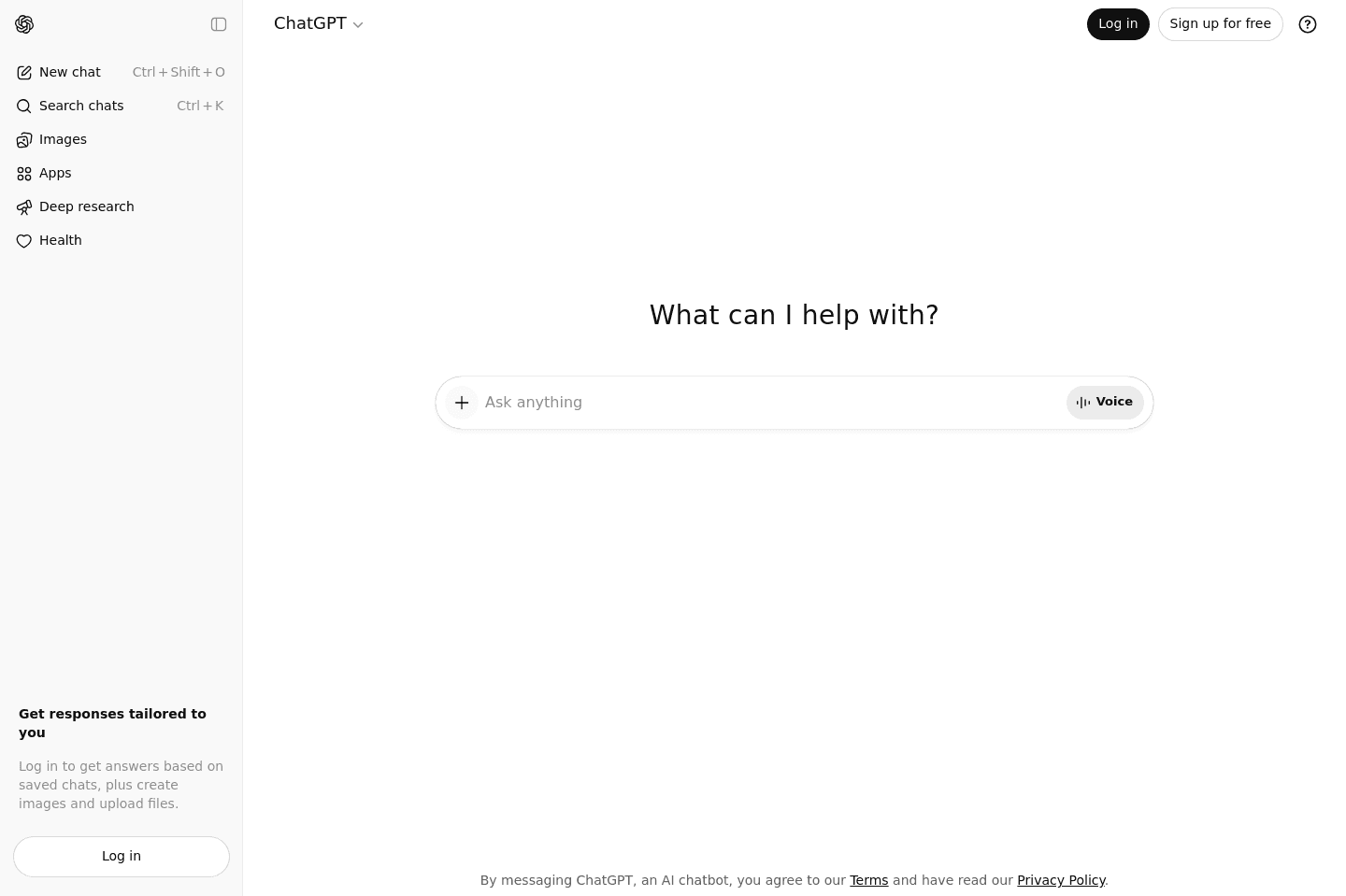
What really is there to say? ChatGPT was the fastest-growing consumer app in history when it launched. It reached 1 million users in about 5 days after launch and 100 million users in about 2 months after launch.

OpenAI is general artificial intelligence. You can ask it questions, and it'll answer them, like a human. You can ask it to write code for you, and it'll build it, all while explaining the why and how.

Engineering friends of mine are worried that it'll replace their job, and yet they are using it to become a better engineer (using it to teach them different coding languages).

The craziest thing of it all, anyone can use it, and you don't even need to be technical to use it. Just visit ChatGPT here and start asking it questions. You'll be amazed by what it can do. If you're more technical, then be sure to check out the actual API and see where you can fit it into what you're building (I mean everyone else is).

Everyone is trying to build a OpenAI (ChatGPT) into their product right now. It's the closest thing we've seen to magic in an incredibly long time.

4
Claude

Claude

Best for thoughtful reasoning and execution

Best for thoughtful reasoning and execution

There is a reason Claude is getting a ton of attention right now. It's genuinely good for getting work done, coding, and writing. But as a small business, be careful how deep down the rabbit hole you go.

Use it as a writing partner, a thinking partner, a research tool. But if you're a small business owner, don't try to use Claude to vibe code your own software (I promise you, your team will be frustrated and you'll abandon it within 30 days 🫠).

Claude
Go to Claude site

What is Claude?

What is Claude?

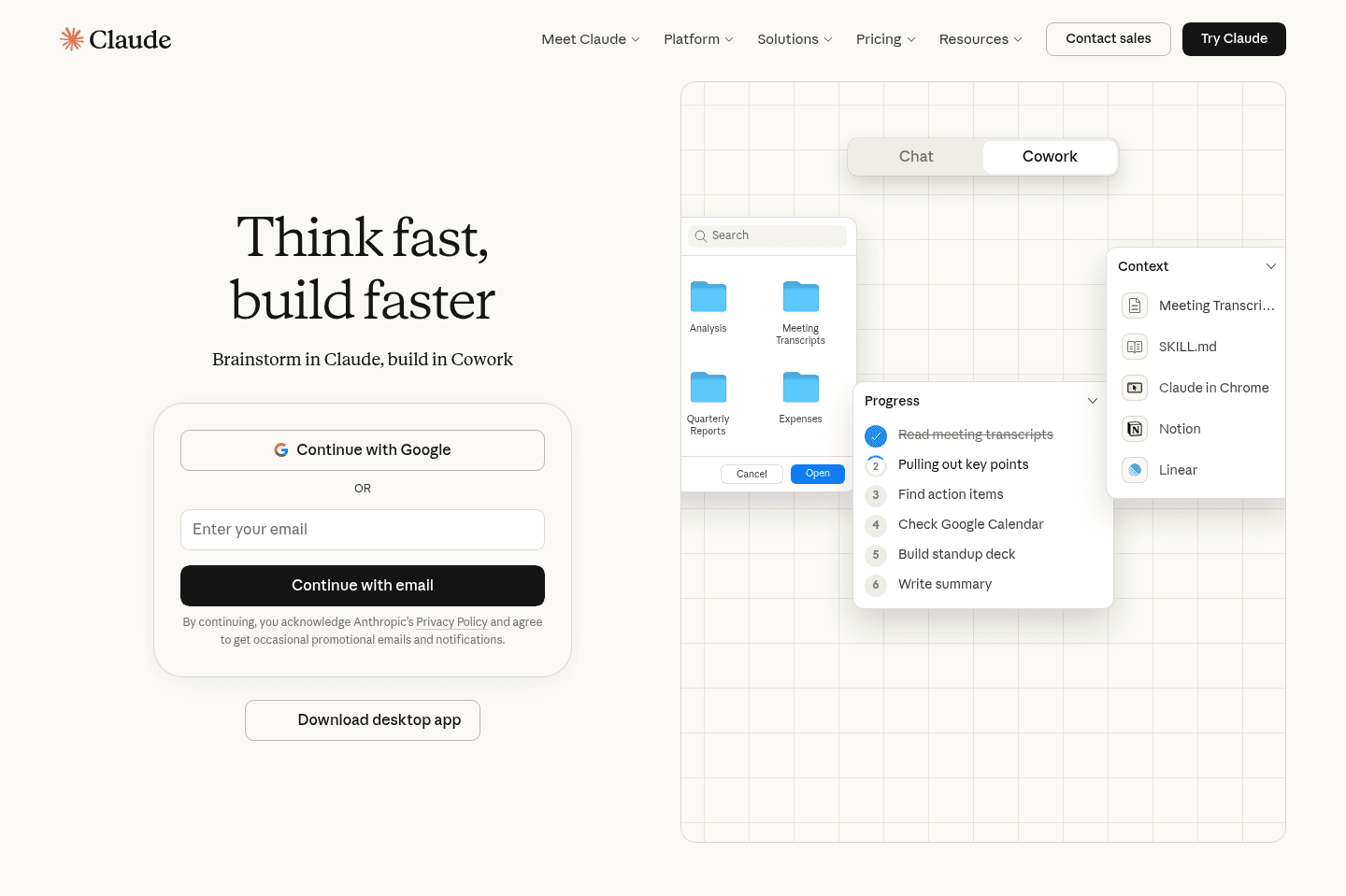
Claude is an AI assistant built by Anthropic, designed for professionals and operators who need more than a generic AI response. It tends to follow complex instructions more completely, sounds less generic, and holds onto more context when you give it a lot to work with. There's also Claude Code for developers and Claude Cowork, a desktop agent that works with files on your machine.

I'll be honest, I resisted trying Claude for a while. I'd been using ChatGPT for two years and it knows me and my writing style incredibly well. Every time I tried Claude before really committing to it, I was disappointed because it just lacked that context, and I'd walk away thinking "I don't get what everyone's talking about!" But the hype kept coming from people I respected, so I couldn't shake the feeling that I was missing something.

What changed it for me was exporting all of my writing instructions from ChatGPT and loading them into Claude as a skill. After that, the experience improved dramatically. Claude started asking better questions and the writing output got a lot closer to what I actually wanted. Now I find myself reaching for Claude specifically when I'm doing deeper writing work. It pauses to ask clarifying questions more than ChatGPT does, and it genuinely seems to honor the context I've given it rather than just acknowledging it and moving on.

Is that because Claude is naturally more thoughtful, or because my prompt told it to ask more questions? Honestly, hard to say. Without the skill loaded in, my earlier experience was nowhere near as impressive as the internet made it sound. So if you're going to try Claude and you already have a strong writing brief (or any other brief) somewhere, move it over before you form an opinion.

Where it still falls short is the surrounding product experience, the Chrome extension, the cross-device memory in Cowork. Those feel like areas where ChatGPT has just gone a lot deeper on the day-to-day user experience, and you notice the gap when you hit them. For now I'm keeping both, especially because I use ChatGPT Atlas for browser work.

Pros and Cons

Pros and Cons

Pros

Pros
  • Automatically references your skills and writing briefs without being told to
  • Longer context window means it holds onto more when you give it a lot of input
  • Claude Code is loved by engineers

Cons

Cons
  • Chrome extension has no memory, close it accidentally and everything is gone
  • Cowork context doesn't persist across devices
  • Usage limits are annoying, we hit them fast doing deep research on the standard tier
  • Cowork is less useful if your whole workflow lives in web apps

Key Features

Key Features

Reasoning and Writing

Reasoning and Writing

Claude gives more complete answers without turning into an endless refinement loop. ChatGPT has a habit of ending every response with "want me to improve this?" and you end up going in circles. Claude just answers, and the conversation tapers naturally unless you push it further.

Skills

Skills

Claude automatically references your writing brief or skill in every relevant chat without you asking. With ChatGPT you have to actively add chats to a project to get that same behavior. It's a small thing that ends up mattering a lot when you're opening new chats constantly throughout the day.

Claude Cowork

Claude Cowork

Cowork is Claude's desktop agent, it can take actions across your computer, work through tasks, and integrate with your tools. If you work heavily out of local folders and project files, you'll probably get a lot out of it. For me, my whole workflow lives in apps like Superhuman Mail, Linear, and Granola, so it hasn't been life-changing.

Pricing

Pricing
  • Free: Limited access, good for testing the product before committing.
  • Pro: $20/month. This is the tier most founders and operators will want. Gives you access to the full model and the features that actually matter for daily work.
  • Max: $100/month. Higher usage limits and more capacity for longer, more intensive sessions. Worth considering if you're hitting limits regularly.
  • Team: $30/month per user (minimum 5 users). Adds collaboration features and admin controls for teams.
  • Enterprise: Custom pricing. Expanded security, compliance, and deployment options for larger organizations.
Mercury
Mercury
Featured

The modern business bank built for teams of all sizes. What if you could actually enjoy your bank? With Mercury, you will.

5
Superhuman Mail

Superhuman Mail

AI email client

AI email client

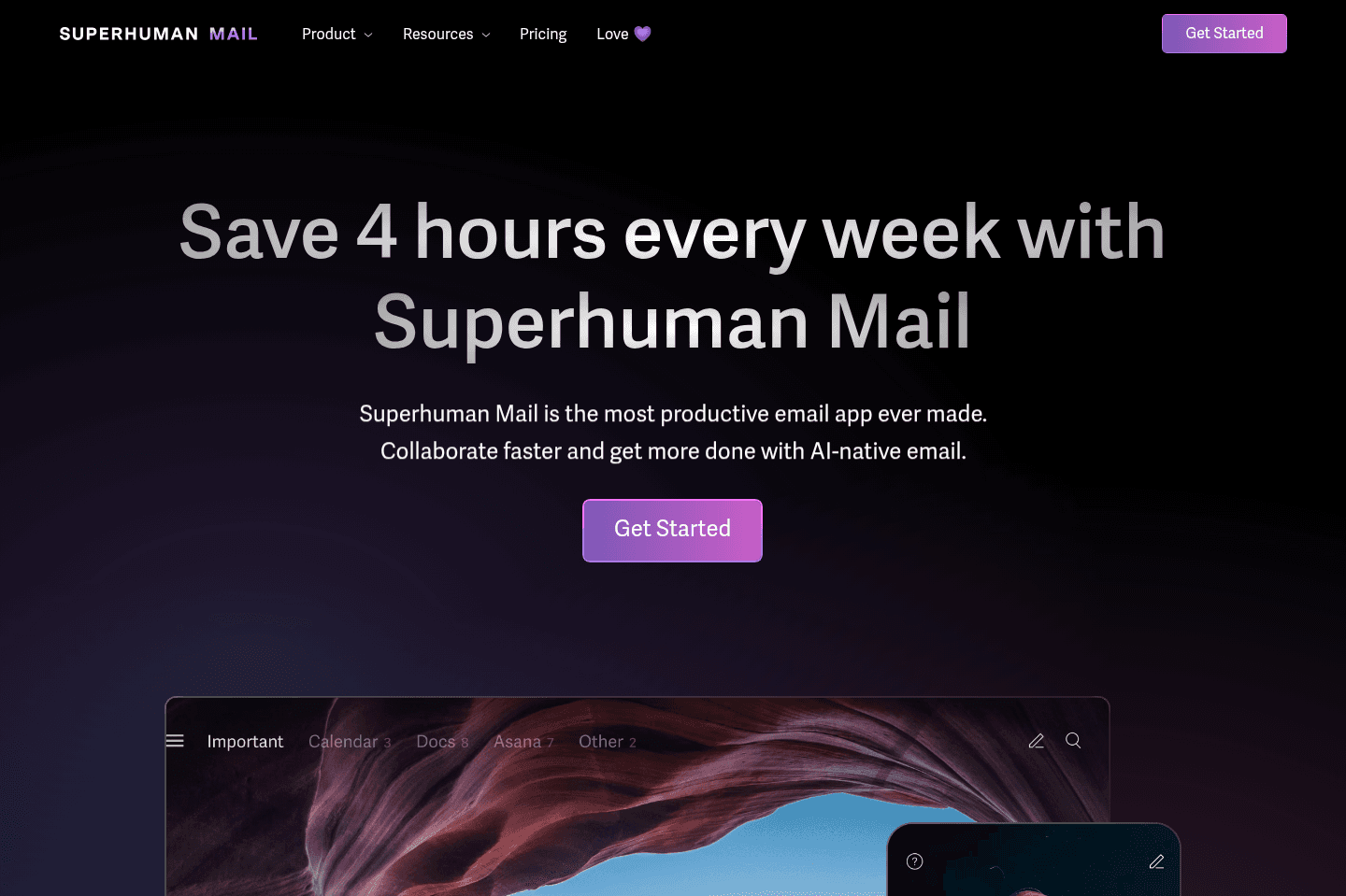
Superhuman Mail is the best email client on the market. It's wildly fast, minimal (not bloated with features), and helps individuals and teams triage through emails most efficiently. We've been using it for 6+ years and can't ever imagine going back to regular email.

Claim the Superhuman free trial for 30 days free, which is more than enough time to see if it fits your workflow.

Superhuman Mail
Go to Superhuman Mail site

What is Superhuman Mail?

What is Superhuman Mail?

We started using Superhuman Mail before it even had AI features (7 years ago!), and it was already the best email client we'd ever used. But now, with AI fully baked in, it's more than just an email client, it's an entire email assistant.

I always joke with people and ask: would you really not pay $30/mo for an assistant to help you with emails? You're likely paying closer to $30/hour! It's different than other AI email assistants out there because the team behind it (which we've had the pleasure of meeting) deeply cares about quality. Instead of just releasing features where "AI can write emails for you" but it's wrong 90% of the time, they'd rather just put features in front of you that you will consistently use.

Superhuman Mail writes in your actual tone, and it even detects when an email needs a follow-up and will automatically write it for you. All you need to do is hit send.

Pros and Cons

Pros and Cons

Pros

Pros
  • Fast, literally instant compared to Gmail or Outlook
  • Minimal, beautifully designed interface with zero clutter
  • AI drafts follow-ups in your actual tone, not a generic template voice
  • AI auto-labels help sort your inbox with accuracy
  • AI search lets you ask plain-language questions about your inbox
  • Team email collaboration features help move emails forward more quickly

Cons

Cons
  • Might feel unnecessary if you don't spend much time in email

Key Features

Key Features

AI Auto-Labels

AI Auto-Labels

This is one of those features that sounds simple until you actually use it. You can create a label using plain language, something like "emails about tax" or "emails about sales" and Superhuman Mail will scan your inbox, pull in everything that matches, and then give you a preview before creating the rule to apply the label.

You check the ones that belong, uncheck the ones that don't, and it learns from that. Then you can create split inboxes with your most popular labels. The result is that instead of one overwhelming wall of emails, you get intentional mini-inboxes.

E.g. you can have one for customer orders, one for partnerships, one for tax-related stuff. You triage each one separately, with full focus, and it becomes a lot easier to see at a glance what actually needs your attention today.

AI Follow-Up Drafts

AI Follow-Up Drafts

If you do sales or manage partnerships out of your inbox, this feature alone justifies the cost. Superhuman Mail monitors your sent emails and automatically queues up a follow-up draft when something hasn't gotten a response.

You don't have to remember to circle back or build reminders, it just appears in your inbox, written in your tone, ready to review and send. Honestly, about 90% of the time it's perfect as-is because it's usually just a simple nudge.

The other 10%, you edit a line and send anyway. It's the kind of thing that feels like having a very organized assistant who never forgets anything.

6
Kick

Kick

Best AI accounting & bookkeeping

Best AI accounting & bookkeeping

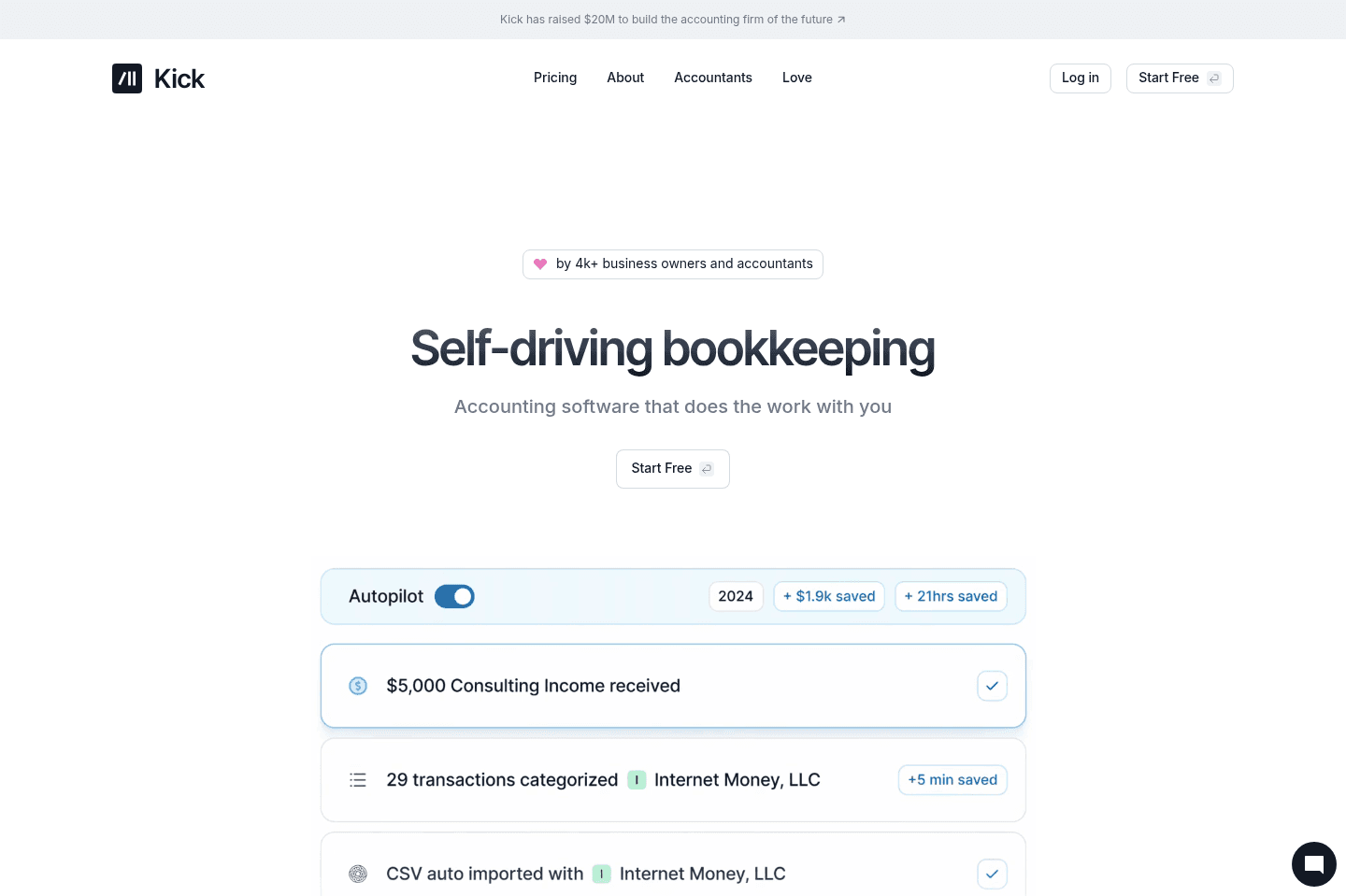
Kick is a new AI-powered bookkeeping and accounting platform that we are super bullish on. We've been using QuickBooks Online (QBO) since 2010 because for a long time it was one of the only options available, but it has been absolutely dreadful software to use. If you're a new business, we strongly urge you to consider using Kick from the get-go; it's about 500 times more user-friendly than QBO.

That said, if you need full accrual accounting, or have heavy inventory, fixed assets, or a complex e-commerce business, Kick is not ready for you (yet)—but they're catching up quickly.

Kick
Go to Kick site

What is Kick?

What is Kick?

Kick is a new AI-powered bookkeeping and accounting platform that we are super bullish on. We’ve been stuck using QuickBooks Online (QBO) since 2010 because there weren’t many other options, but let’s be real—it’s dreadful to use. When we found Kick, we were stoked. If you’re a new business, we strongly recommend starting with Kick, it’s about 500 times more user-friendly than QBO.

The Stripe, PayPal, and Mercury integrations work seamlessly out of the box, unlike QBO’s nightmare setup. That said, if you need full accrual accounting, heavy inventory tracking, or complex e-commerce features, Kick isn’t quite there yet—but they’re catching up fast.

Pricing

Pricing
  • Free: $0/mo. Best for businesses just starting out or evaluating the product (up to $25k in annual expenses). This is a genuinely useful free tier, not just a trial.
  • Basic: $35/mo ($420/yr). Best for small businesses that want more customization and automation beyond the basics.
  • Plus: $125/mo (billed quarterly). Best for growing businesses that need deeper financial reporting and more control.
  • Custom: Starts at $200/mo. Best for larger or more complex businesses that need dedicated support, tax services, and advanced accounting.

You can manage multiple businesses within Kick, so keep that in mind too (as you'd normally need to pay for separate subscriptions per business).

Mercury
Mercury
Featured

The modern business bank built for teams of all sizes. What if you could actually enjoy your bank? With Mercury, you will.

7
Littlebird

Littlebird

Best for context-aware recall

Best for context-aware recall

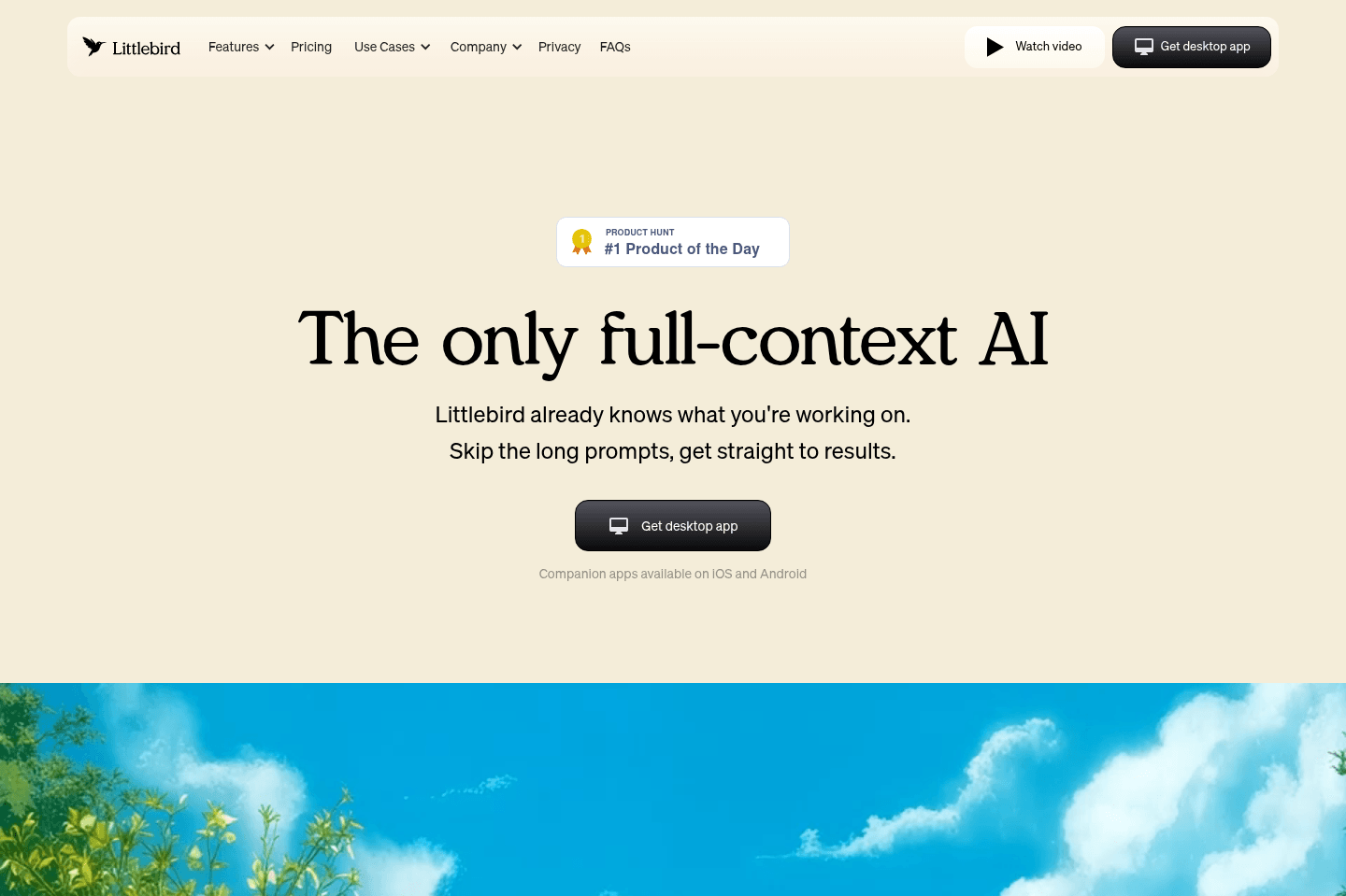
Littlebird is an AI assistant that actually knows what you're doing, from your meetings (via their AI note taker), calendar, email, and actually pulling context from on-screen activity. You can just ask, "What did I do today?" and it answers you, but the same always-there "layer" is also what gives us pause. We see that vision here and know that the best AI will be the one that has the most context.

Opinions are still forming, and we're still leaning on Granola for meetings, but if the privacy tradeoff doesn't bother you, this one is worth a shot.

Littlebird
Go to Littlebird site

What is Littlebird AI?

What is Littlebird AI?

Littlebird is an AI assistant that records meetings, takes context from what you do on your computer, and aids you in recalling and getting work done.

While they're positioning themselves as more of an AI productivity app, it's clear that they've been seeing the explosive growth of Granola, and are focusing their sights on AI note taker meets context aware AI assistant.

Final Verdict

Final Verdict

If you're comfortable with Littlebird having access to your on-screen activity, then you'll immediately see what makes Littlebird special, with what is unlocked when an AI assistant has access to what you've done throughout the day. Definitely grab it for free, and worth locking in the Littlebird discount now if you ever want to upgrade in the future.

But if you're not yet comfortable with a relatively new startup having access to the data it collects, then you might be better off looking at a more privacy-first AI note taker, and should check out our Granola review for now.

8
Supercut

Supercut

Best AI video messaging tool

Best AI video messaging tool

If you're looking for the most modern screen recording software that has a focus on async team collaboration, Supercut is the clear leader in the space, no tool does it better. We've been using it for over a year and it's a joy to record and receive a Supercut! 🫶

Supercut
Go to Supercut site

What is Supercut?

What is Supercut?

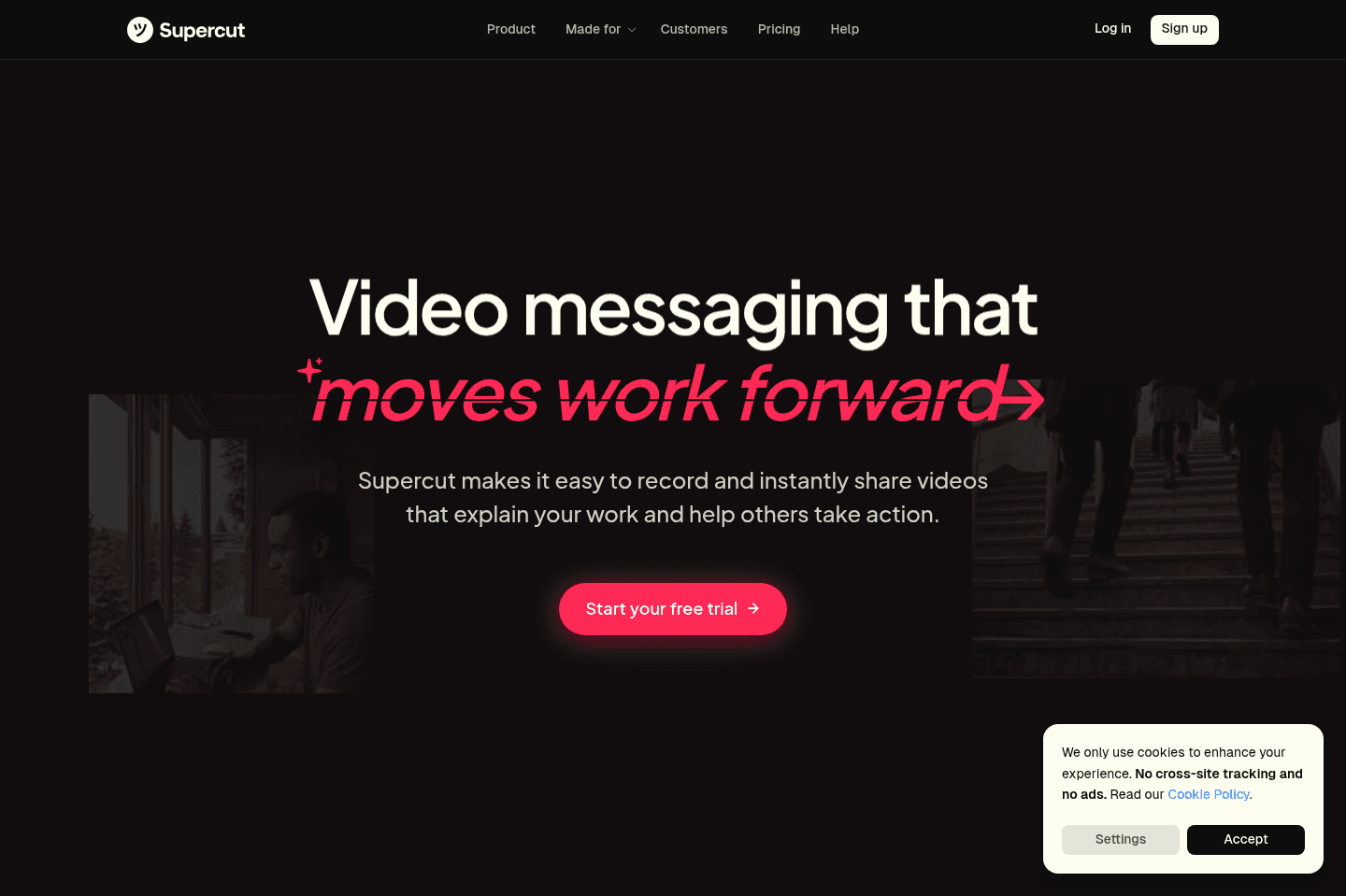
Supercut is a video messaging tool built for teams that want to communicate through screen recordings instead of constantly jumping into meetings. It's insanely easy to use; you just hit record, walk someone through your screen, and send it off.

The functionality and simplicity don't stop at recording either; For every video you record, you get transcripts, an AI assistant that can pull insights or generate summaries, and a clean viewing experience that makes people want to watch.

It's great for SMBs that move fast and rely on clear communication (especially remote or async teams). Product and engineering teams can show bugs instead of writing them, and sales or support teams can walk through things without over-scheduling calls.

We originally found Supercut after asking for Loom alternatives on X, but none of the suggestions did anything to make my workflow easier. Loom was getting more and more bloated, and just as I was making peace with the fact I wasn't gonna find anything, I scrolled past and an X post about Supercut's launch.

After my first use of Supercut, I absolutely loved it! It's now part of our daily workflow team communication or bug reports. It's replaced a lot of our internal calls, and I've noticed we miss way less because everything is searchable and really easy to reference.

Compared to tools like Loom or Tella, Supercut feels so much more modern and intentional since it's focused on eliminating friction through user-friendly UI. Plus, other tools don't have AI assistants or keyboard shortcuts that actually make your life easier.

Pros and Cons

Pros and Cons

Pros

Pros
  • Fast, reliable recording experience
  • AI assistant is smart and genuinely useful
  • Clean, branded sharing experience for clients
  • Transcripts make videos easy to reference later
  • Strong async collaboration (comments, CTAs, analytics)

Cons

Cons
  • Not built for heavy or long-form video editing
  • Manual organization with stacks
  • Some friction for external collaborators (account required for leaving comments)

Key Features

Key Features

Recording Experience

Recording in Supercut for the first time left us somewhere between shock and excitement. Everything was just FAST. The recording panel is clean, nothing gets in your way. You hit record, do your thing, and it's ready to share almost immediately.

Coming from Loom, this was a big shift. Loom started to feel sluggish and unpredictable for us (after Atlassian took over), especially when we were recording back-to-back. It would crash and we'd be re-recording the same thing sometimes 3 times over. We've been using Supercut since 2025 and found it's way more reliable and smooth, and that's exactly what's been missing from the video recording market.

Transcripts

Every video comes with a transcript, and we use it this way more than we expected. You can jump to specific moments or even share exact sentence links. When you're working across teams, like us, that's really helpful. Product can go straight to their section, sales can skip to theirs, and no one has to sit through the whole video just to find one detail.

We've even used transcripts to train custom GPTs and pull content into other workflows. It turns even one-off recordings into something you can reuse and search, all while keeping everyone accountable.

AI Assistant

A lot of tools are rushing to add AI right now, but most of it ends up feeling bolted on. This doesn't. Supercut's "ask anything" feature lets you interact with your video almost like it's a document. You can ask things like "what are the action items?" and it'll pull the answer instantly.

I use it a lot when working with contractors, and I'm thinking, "I feel like I mentioned this in my video," so I'll quickly pop over to Supercut and search, "did I mention XYZ in this video?" and the AI assistant will provide me a time stamp and screenshot of the moment I mentioned it. Even more than that, it can go as far as to generate clear summaries, organized bug reports, and even full write-ups, which keeps me from context switching, and saves me tons of time.

Collaboration

Comments live directly on the video timeline, which keeps everything in context. Instead of getting Slack messages like "hey, at 4:12, what did you mean," the feedback is tied exactly to the moment it's about.

It's a small thing, but it changes how people interact with videos. There's even a cute keyboard shortcut ("c") that makes leaving comments speedy.

For client-facing teams, CTAs are insanely simple and useful. You can add a clear next step at the end of any video. It removes that awkward gap where someone watches your video and then… does nothing. It's a simple feature that pushes your viewers to book a call or review something.

Editing

The editor is amazing! It feels more like editing text than editing video. You highlight what you don't want, cut it, and move on. You can trim silences, clean things up, adjust layouts, and make quick improvements without having to re-record (which takes so much time).

It's not built for heavy production work, so don't expect to rearrange full sections or build complex edits like you would in something like Tella. But for day-to-day communication, it's perfect.

Pricing

Pricing
  • Free 14-day Trial: Best for individuals testing async workflows. No credit card required.
  • Pro: $15 monthly ($18/mo if paid annually). Best for professionals and teams who want full access to collaboration, branding, and AI features.
  • Enterprise: Contact for pricing. Best for companies needing cross-departmental communication, advanced controls, and more security.

Don't forget to grab your Supercut Discount before creating an account.

Mercury
Mercury
Featured

The modern business bank built for teams of all sizes. What if you could actually enjoy your bank? With Mercury, you will.

9
OpenAI

OpenAI

Best API for AI access

Best API for AI access

What really is there to say? Everyone is trying to build a OpenAI (ChatGPT) into their product right now. It's the closest thing we've seen to magic in an incredibly long time.

OpenAI
Go to OpenAI site

What is OpenAI?

What is OpenAI?

OpenAI is general artificial intelligence. You can ask it questions, and it'll answer them, like a human. You can ask it to write code for you, and it'll build it, all while explaining the why and how.

Engineering friends of mine are worried that it'll replace their job, and yet they are using it to become a better engineer (using it to teach them different coding languages).

It's amazing as to what will be made possible with it, and the demo video below between Slack + OpenAI + Motion is just a tiny glimpse into where you can see it intelligently improving our every-day processes.

The craziest thing of it all, anyone can use it, and you don't even need to be technical to use it. Just visit ChatGPT here and start asking it questions. You'll be amazed by what it can do. If you're more technical, then be sure to check out the actual API and see where you can fit it into what you're building (I mean everyone else is).

10
Motion

Motion

Best AI project management for small-mid-size teams

Best AI project management for small-mid-size teams

Motion is the most innovative AI-powered project management tool for individuals and teams who want to fully embrace AI to get work done.

It uses AI to take all of your team's projects, tasks, priorities, deadlines, and dependencies to build the perfect day for you and your team, time blocking tasks right on your calendar. They also have AI Docs, & an AI Note Taker, helping you get work done faster.

We've been using it for 5 years and is core to how we manage our time and projects!

Motion
Go to Motion site

What is Motion?

What is Motion?

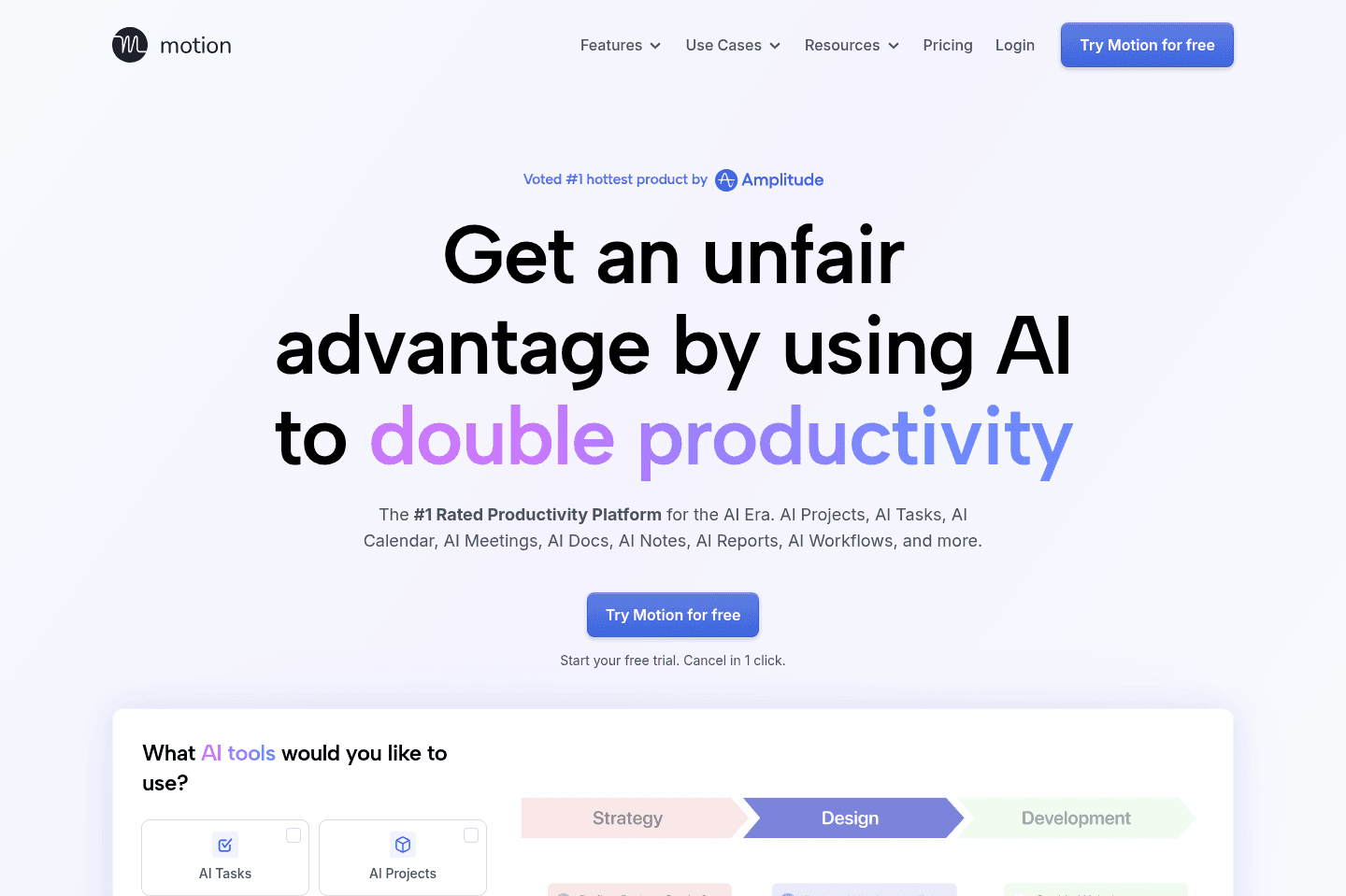
Motion is a calendar-first, AI-powered project management system that brings your tasks, meetings, documentation, and team workload into one tool.

Previous to using Motion, we used Asana for seven years. It kept us organized enough, but I was spending at least an hour or two every week just "cleaning up" the tool so it wouldn't fall apart. Deadlines would shift, priorities would change, and suddenly half the board was out of date. That's why we switched to Motion five years ago and haven't looked back.

The core thing Motion does differently is it actually schedules your tasks onto your calendar automatically, based on deadlines, priorities, and availability.

And when plans change, which they always do, it updates everything for you. What really got me early on was the deadline visibility. If our team has 5 hours of meetings in a day and 8 hours of work scheduled, Motion flags that we're at risk before it becomes a problem.

We use it to manage our entire YouTube production process, from scripting and filming to editing, reviewing, and distributing.

Recently, Motion has become more of an all-in-one tool. On top of being a calendar and project management tool, you can also store all of your notes and documentation in the app via their AI Docs and meeting recorder. This is especially helpful as you can tie meeting notes to projects, and when asking the Motion AI Assistant it has full context on projects, discussions, and notes.

And they didn't just tack on these features either... their meeting recorder is one of the best we've used (for instance, it creates tasks automatically at the end of each call, allowing you to assign it to team members directly).

So if you want a project management tool that will help your team just focus on getting work done (instead of babysitting your project management tool), give it a shot.

Pros and Cons

Pros and Cons

Pros

Pros
  • Only calendar-first project management tool on the market
  • Automatically schedules tasks directly on your calendar using AI
  • Takes your entire schedule (meetings + work) into account
  • Has most traditional project management features (gantt charts, kanban views)

Cons

Cons
  • Not ideal if you don’t want AI automatically managing your schedule
  • The interface can feel cluttered
  • Minimal reporting & dashboards
  • Not for enterprises

Key Features

Key Features

Project Management

Project Management

Motion has all your traditional project management capabilities including kanban, gantt charts, and list views. But on top of that, they also have a calendar at the core that schedules tasks from your projects onto your calendar. No other tool fully integrates at this level.

Calendar

Calendar

Motion is the only project management tool on the market built with a calendar at the core. We use it as a full replacement for Google Calendar in our day to day (on top of using it for project management). Motion is truly one of the best calendar apps on the market if you're looking for something powerful.

AI Auto-Scheduling

AI Auto-Scheduling

Managing your workload is tiring, we experienced it ourselves every time we had to rearrange our tasks and priorities when using Asana. That's why daily planner apps came on the market, allowing you to pull in tasks from other project management tools and plan them on your calendar.

But Motion chose not to integrate with daily planner apps, and instead become one of the best daily planning apps themselves and built powerful project management features on top (while also using AI to automatically create your schedule for you like an assistant would). So what does this mean?

Didn't get something done? No worries, Motion will reschedule it for you based on the priority on your calendar. At risk of missing a deadline? Motion will warn you and you can fix it with a few clicks. Want to push back the deadline of a bunch of projects? Tell their AI Chat and it'll do it for you.

You can even forward emails into Motion and it will automatically create a task and schedule it on your calendar.

Workflow Templates

Workflow Templates

Workflow Templates in Motion are reusable project templates that define exactly how your work gets done from start to finish. They include your roles, stages, tasks, and key details so every project follows the same structured process.

Once set up, Motion uses the template to automatically schedule everything on your team's calendars and adjust timelines when things change. This makes starting projects incredibly easy & fast!

AI Docs

AI Docs

Motion’s AI Docs are great for keeping processes and notes right inside your projects, perfect if you don’t already have a knowledge base software in place. That said, don't expect it to be as powerful as Notion or Slite. Motion AI docs are more suitable for basic documentation and notes.

The best part of using Motion Docs for all your notes is that you can quickly tag projects and tasks within the docs itself. And when searching across your projects with Motion's AI Assistant, you get a full picture of project updates (it takes into account your projects, docs, and even meeting notes so when you ask for an update, it can truly give you an accurate picture of what happened).

But as a heads up, when we really want to do serious writing (e.g. scripting or a full software review), we find ourselves opening Motion within Dia or ChatGPT Atlas (our browsers) because using their sidebar chat assistant is faster for writing in our tone, brainstorming, and doing research.

Meeting Recorder

Meeting Recorder

We love Motion's Meeting Recorder, and if you're already using Motion for your projects, there's really no reason to use another one. It automatically joins your meetings (you just have to let it in), records video and text, and then uses AI to organize the notes for you. It also automatically creates tasks from the meeting notes and all you need to do is approve or deny them.

Pricing

Pricing
  • Pro AI: $19/seat/mo (billed annually). Best for professionals and small teams who want AI-powered project management, scheduling, and task planning.
  • Business AI: $29/seat/mo (billed annually). Best for teams that need advanced reporting, capacity planning, time tracking, permissions, and centralized billing.
  • AI Credits: Included with each plan. Pro AI includes 7,500 credits/seat/month and Business AI includes 15,000 credits/seat/month.
Mercury
Mercury
Featured

The modern business bank built for teams of all sizes. What if you could actually enjoy your bank? With Mercury, you will.

11
Perplexity

Perplexity

Best for researching, whether work, student, or personal

Best for researching, whether work, student, or personal

Perplexity is the best research assistant LLM on the market, like Google but with better citations.

Perplexity
Go to Perplexity site

What is Perplexity?

What is Perplexity?

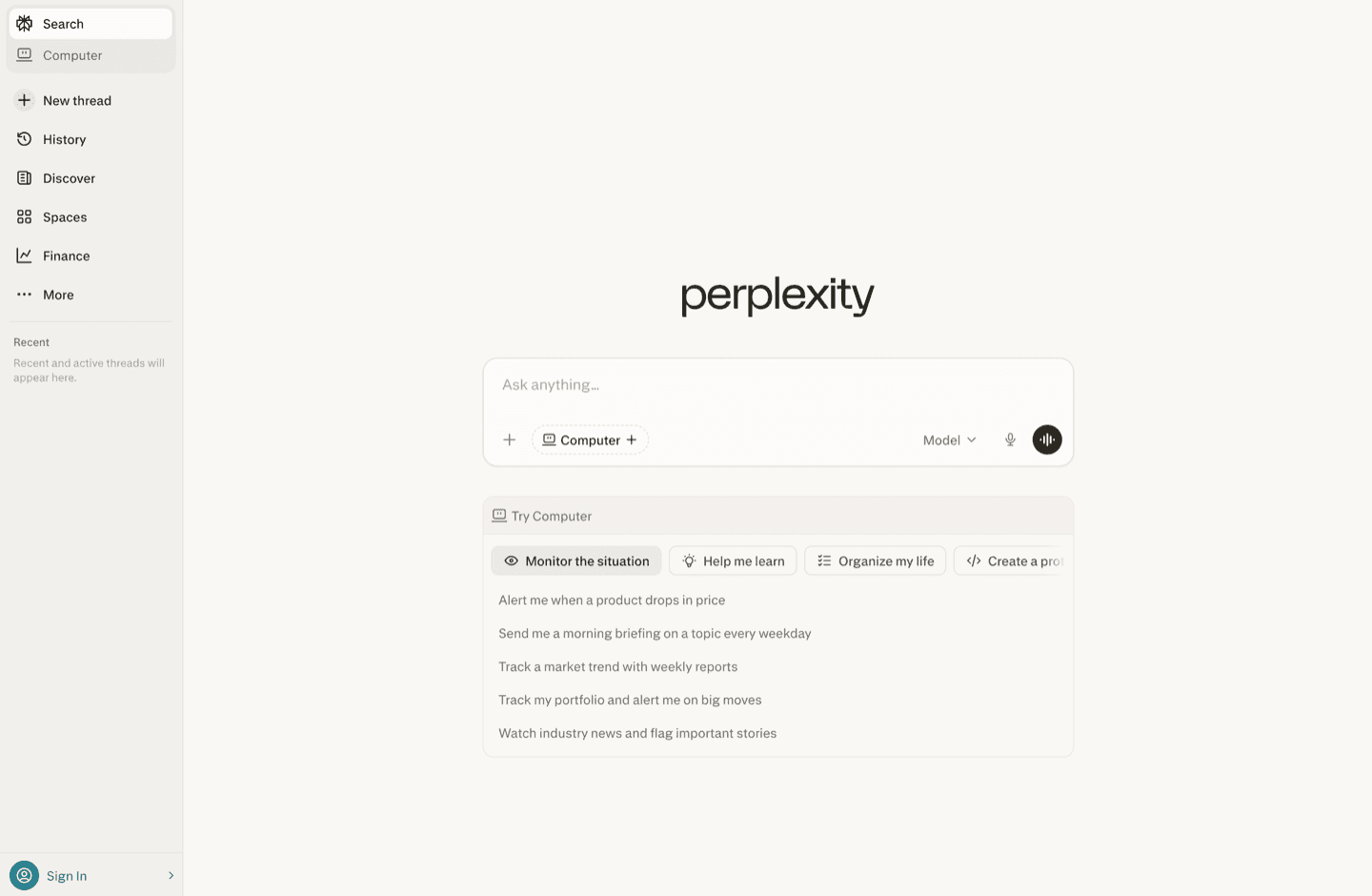
Perplexity is an AI-first search engine that replaces Google with direct answers pulled from the web.

We like to use it when doing deep research that we need sources from the internet. It pulls from multiple sources in real time, making it one of the best tools for researching topics online.

One of the main benefits of Perplexity is that it gives you access to multiple LLMs in one place, so you can switch models depending on what you're trying to do.

That said, we find it's much better for internet research than deep reasoning. It's strong at finding and summarizing information with sources, but not as strong as other LLMs for complex problem-solving, math, or advanced reasoning tasks.

Perplexity also offers its own web browser, Comet (an alternative to Chrome), where you can use Perplexity as your default search engine and experiment with AI agent-style browsing features.

Our Final Verdict

Discover More Efficient Apps Lists

Explore the best apps across different categories and find the perfect tools to stay productive.

Superhuman Mail
Missive
Notion Mail
Spark
Gmail
Tatem
Hey
Outlook
Skiff
Email

9 apps and 0 deals

Motion
Linear
Asana
Monday
ClickUp
Wrike
Trello
Jira
Shortcut
Project Management

9 apps and 0 deals

Browse Categories