

If you're a B2B SaaS company and are curious as to which of the above you should choose and are looking to actually invest in your partnership strategy (actually working on increasing your referral MRR), look no further than Dub Partners & PartnerStack. If you've taken a look at our Top Picks section, I'm here to tell you that the far majority of them (that have a affiliate/referral channel) are using PartnerStack—It's no coincidence. They will seamlessly integrate into your Stripe, making the whole payout and reconciling process a breeze.
If you're simply looking for a barebones affiliate tracking tool, think "link clicks, nothing more", then one of the affiliate tracking tools FirstPromoter will do the job. Just keep in mind that going this path, you're going to have a less automated reconciling process when it comes to payouts/refunds and the likes. We genuinely only recommend going this path if you aren't yet trying to roll out a proper partnership strategy.
There is only one thing for certain, and that's to stay away from Impact if you are a B2B SaaS company. I don't know how else to put it... They were built for large B2C eCommerce brands like GAP and coupon sites like Honey. They've somehow managed to change their branding around the SaaS space (largely due to getting a few big-name SaaS companies like HubSpot and ClickUp but don't let that fool you).

.webp)

The referral category deserves a bit of an explanation because we continually see confusion arise when it comes to the competitors in this space. You'll often hear terms like "affiliate", "referral", "link tracking", and "partner portals" all used interchangeably.
And with that, not all referral tracking tools are created equal, nor are they focused on the same needs. They can actually be broken up more into 5 main sub-categories:
Affiliate tracking tools are focused primarily on one-way link tracking (think Amazon Affiliate links), by which the end-user usually has no idea money is being made off of their purchase. This is also because the end user rarely gets an incentive for using the link, maybe an extended free trial, or it can even be just a way for them to support their favorite creator.
More of a 2-way relationship—the purchaser usually knows that a transaction is taking place, might even be a benefit to the end-user (e.g. get $50 credit for signing up).
This is where things get a bit more difficult, as you're not really going to get referral functionality out of the cheaper affiliate software options mentioned above.
So if you're planning on having a more serious partnership strategy around referral tracking (especially important if you're a higher ticket SaaS product or focused on larger seat counts like mid-market/enterprise).
3rd party license management. This is more common in the IT space where an IT services company may purchase software licenses in bulk, and then resell them to customers of theirs, billing them directly, and making margin. Think for example a Google Workspace reseller.
It's more uncommon, convolutes things quite a bit (for both the partner and software company), as it introduces difficulties such as sales tax onto the reseller partner.
We've seen this work well mainly for companies that solely sell their software as a white-labeled solution, and their sole software sales motion is to their resellers. This takes a lot to get right.
Strategic partner initiatives & distribution. If you're just starting out your partnership, affiliate, or referral strategy, this is where this category comes into place. The reason being is that they can actually help you build out your partnership ecosystem.
So yes, you should definitely work to build out your affiliate and referral partners, but a partner ecosystem platform software will actually make it their mission to find great partners that'll promote your software for you. Some of the best companies already have deep relationships with some of the top affiliate sites out there (e.g. Forbes Advisor). The leader in this category is Dub Partners & PartnerStack. There's a reason why about 50–60% of the apps listed on this site that have partner programs use them. More on this below.
Displaying lists of partners & discovery for customers. The main company that we see leading this category is PartnerPage. They also have a deep relationship and integration with PartnerStack.
Example customers include: Zapier, Airtable, Notion, FullStory
.svg)

Dub is the modern link attribution platform for affiliate programs.
Dub Partners is the most modern affiliate and partnership tracking platform on the market. Unlike older affiliate tools built for eCommerce or coupon sites, Dub Partners was built directly alongside creators, influencers, and real affiliate partners. The result is a platform that shows exactly which content, pages, and channels drive revenue with accurate, first-party attribution that actually works across modern browsers (including iPhones and Safari).
PartnerStack is a partner ecosystem management platform that helps companies build an manage their partnership programs (along with affiliate/referral tracking).
PartnerStack is one of the main leaders in this space. They try to be more than just an affiliate tracking (think link click and attribution tracking).
That said, when comparing it to the newer entrants in the space like Dub Partners, it's pretty difficult to choose PartnerStack over it, as Dub Partners has better pricing, a more user-friendly interface, and is actually a full-fledged link tracking platform at the core, leading to better analytics and tracking (for both you and the affiliate partner).
We've used just about every modern solution in the market, from FirstPromoter, to Rewardful, to Referral Rock, Impact, and more. The first few are just basic affiliate link tracking solutions, which often also have a higher churn, because just setting up affiliate link tracking is not the same as building out your partnership go-to-market (GTM) initiative (which PartnerStack is aiming to help with).
They are essentially the gold standard when it comes to a SaaS focused partnership platform (they also have the best UI/UX), well, up until Dub Partners launched onto the scene.
PartnerStack starts at 5-figures per year, although, if you're a sizable SaaS though doing at-least $1m/ARR, it's definitely a company you should be seriously considering.
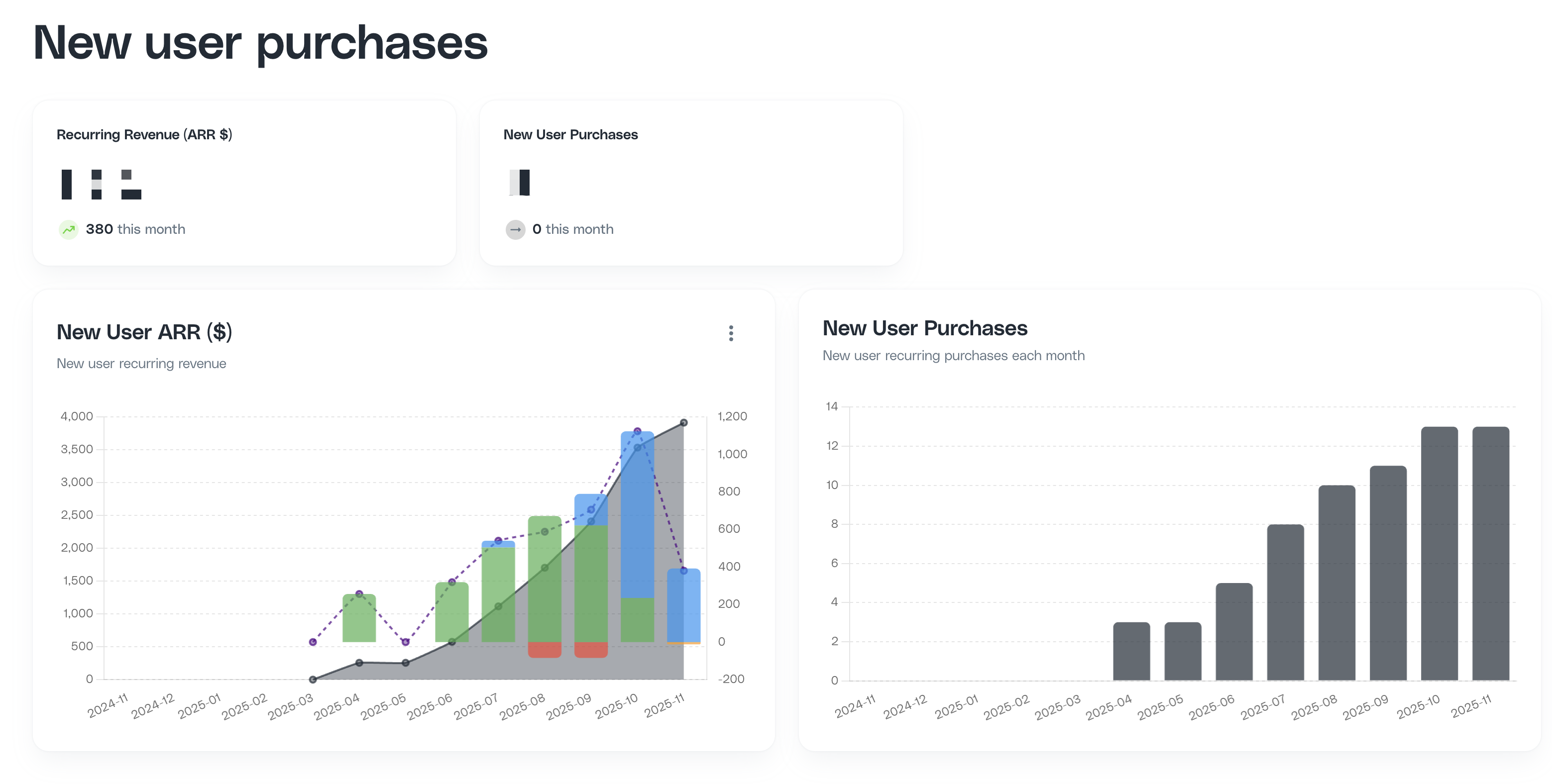
Manage your affiliate and customer referral programs seamlessly — and get started with the affiliate marketing software built for SaaS professionals, digital creators and marketers.
Cello's core differentiator is that it is built for user referrals inside your product rather than your typical affiliate platform. It aims to turn customers into a growth channel via peer-to-peer referrals. This is totally different than a typical affiliate activation that is focused on working with high-volume publishers, creators, or influencers.
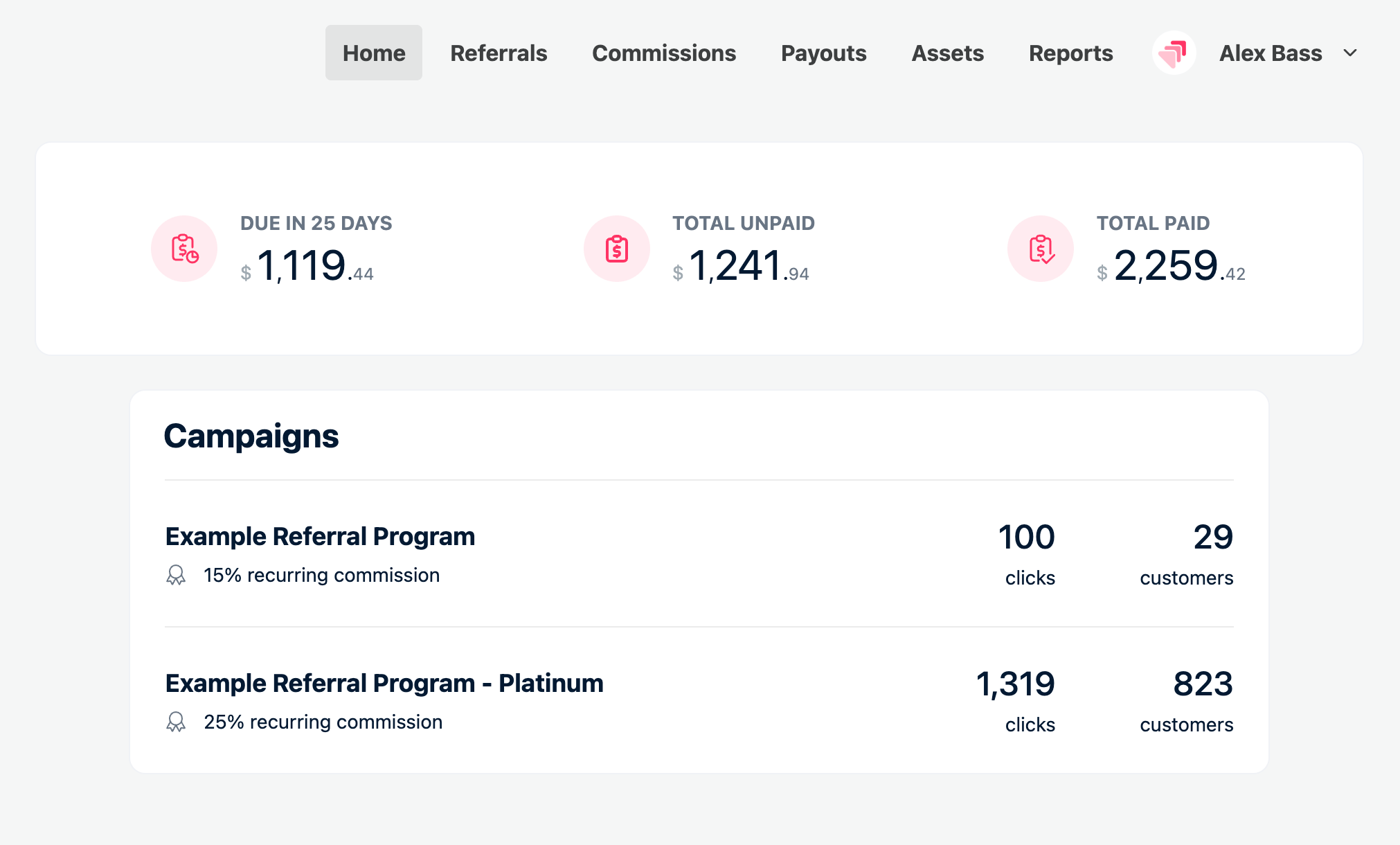
Basic affiliate and referral tracking for SaaS.
FirstPromoter is a legacy affiliate management platform used primarily by SaaS companies to track referrals, manage commissions, and run partner programs. That said, it relies heavily on outdated affiliate processes like separate logins for each program, and limited insight into which content actually converts.
FirstPromoter is an affiliate platform that shares the same core problems seen in the Rewardful review. Your affiliates will not care about your program, they will avoid logging in because they are juggling multiple FirstPromoter accounts (this point cannot be understated, and only the highest impact affiliate partners will be frustrated by it). You will be stuck chasing invoices, sending payments one by one, requesting W-9's, sending 1099's, and W-8BENs (to everyone). All of this and you don't even get the tracking needed to see what is actually working (for your affiliate partners, and thus yourself). So, no...FirstPromoter is not worth it and we'd recommend avoiding it if you want a serious affiliate program.
Compared to modern affiliate tracking tools that are completely disrupting the space, like Dub Partners, FirstPromoter ends up just feeling incredibly dated and inconvenient for everyone. When we see FirstPromoter, we don't believe you're taking your affiliate program seriously.
An affiliate tracking tool for large B2C eCommerce businesses like GAP and Honey (not for B2B SaaS companies)
Impact was built in 2008 when third-party cookies were the norm. While they’ve tried to modernize and adapt to first party cookies with their Universal Tracking Tag (UTT) their system still depends on a redirect “bounce hop” a quick, invisible detour through an Impact domain before sending a visitor to your site. Modern browsers increasingly block or skip these tracking hops. This means tracking never fires leads to unattributed referrals, missing conversions, partner disputes, and ultimately an unreliable affiliate program.
Impact is one of the most expensive affiliate platforms in the industry. Most SaaS companies pay between $10,000–$30,000/year, despite the platform being built for enterprise eCommerce rather than SaaS. More modern, SaaS-native platforms like Dub Partners or PartnerStack often cost less and provide more accurate, dependable tracking thanks to first-party cookies.
Manage your affiliate and customer referral programs seamlessly — and get started with the affiliate marketing software built for SaaS professionals, digital creators and marketers.
Rewardful is an affiliate management platform that falls short where it matters most: making life easy for partners. Your affiliates will not care about your program, in fact they will avoid logging in because they are juggling 30+ separate Rewardful accounts. You will be stuck chasing invoices, sending PayPal payments one by one, and drowning in hundreds of tiny transactions… all while your affiliates have zero idea which of their content is converting.
While It technically works for setting up an affiliate program quickly (great, you have a program). The problem is it's a half-baked solution that will directly impact your partners' willingness to promote you.
What's half-baked? I mean just look at their "one-click PayPal Payout" feature that they advertise. Not even they use it for their own internal affiliate program on Rewardful. What do they do? They pay for a totally separate payout provider called Tipalti (super outdated mind you), but that's their solution, because of how poorly their PayPal payout option works at scale. So they sell you the feature in marketing, but don't even use their own feature, but rather a competitor.
Compared to tools like Dub Partners or PartnerStack, Rewardful feels a generation behind and will be the reason you go from thinking "affiliate is a growth channel" to instead "affiliate is a headache".
When looking at Rewardful pricing, and comparing it (like I'm sure you are) to PartnerStack and others that handle payouts and the entire partnership management side of things, realize that all you're paying for is basic reward tracking with Rewardful. Everything else is manual and painful.
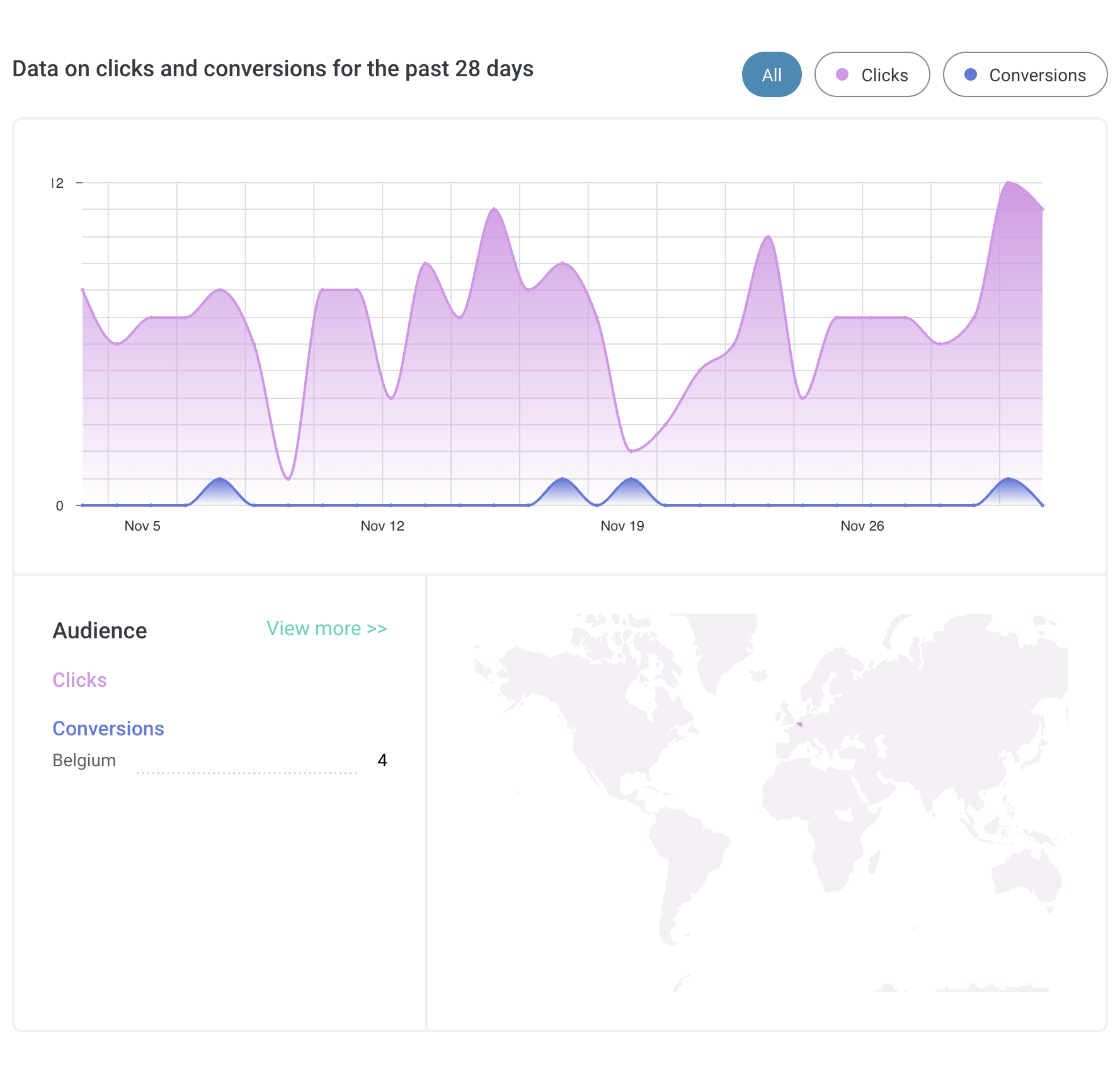
Manage your affiliate and customer referral programs seamlessly — and get started with the affiliate marketing software built for SaaS professionals, digital creators and marketers.
Tapfiliate is an affiliate management platform that has similar issues as Rewardful and FirstPromoter. They all lack a good partner experience resulting in your affiliates not caring about your program. In fact, they will avoid logging in because they are juggling 30+ separate Tapfiliate accounts. You will be stuck chasing invoices, sending PayPal payments one by one, and drowning in hundreds of tiny transactions… all while your affiliates have zero idea which of their content is converting.
While It technically works for setting up an affiliate program quickly (great, you have a program). The problem is it's a half-baked solution that will directly impact your partners' willingness to promote you.
Compared to tools like Dub Partners or PartnerStack, Tapfiliate feels a generation behind and will be the reason you go from thinking "affiliate is a growth channel" to instead "affiliate is a headache".
For these prices, there are much more modern affiliate platforms








.svg)


.jpg)

%20YouTube.webp)
.svg)


