Review Summary
Review SummaryIf you're a B2B SaaS company, don't use Impact. It's that simple. It was built for big B2C eCommerce brands and coupon sites, not for the needs of a software company (e.g. recurring revenue, trials, and subscription tracking). Not to mention it does not have reliable tracking (we often have seen links being blocked by ad blockers).
Using Impact for a SaaS affiliate programs is like building a website on Shopify with no store (it makes no sense). Go with a platform built specifically for SaaS day one, like Dub Partners. Impact is a relic from the past, and you're probably only considering it because your new "head of growth" has used it in the past. Not a good reason.
Best Affiliate Marketing Platforms For SaaS & Startups (Impact vs PartnerStack vs Rewardful vs CJ)
Best Affiliate Marketing Platforms For SaaS & Startups (Impact vs PartnerStack vs Rewardful vs CJ)Impact Alternatives
Impact AlternativesNot sure if Impact is the right fit for you? Check out these alternatives:
 Dub PartnersBest
Best for SaaS affiliate programs
Best for SaaS affiliate programs
What is Impact?
What is Impact?Impact is an affiliate tracking platform built in 2008, an era when third-party cookies were the standard way to track referrals across the internet. The problem is that modern browsers (especially Safari, many new browsers, or iPhones) now block third-party cookies by default for privacy reasons. So the core technology Impact relies on simply doesn’t work reliably anymore.
So what did Impact do? They implemented first-party tracking via Universal Tracking Tag (UTT). But even with UTT, they still rely on a redirect “bounce hop”, a one-second invisible detour through a tracking domain before reaching your site. This is incredibly important to note because most modern browsers (Safari, Firefox, even Chrome when ad blocking is turned on), will automatically flag and block these tracking hops. Users still land on your site, but the tracking step gets stripped out. The result: clicks may show up, but conversions don’t, breaking attribution, under-crediting partners, and giving you misleading program data.
Who is Impact for?
Who is Impact for?Impact is best suited for large B2C e-commerce companies. Examples of brands Impact is suited for:
- Large retail brands: GAP, Nike, Sephora, Macy’s, Best Buy, Samsung, etc.
- DTC brands with many SKUs: Warby Parker, Eight Sleep, Bombas.
- Subscription consumer products: HelloFresh, IPSY, and Blue Apron.
- Coupon websites: Honey, Rakuten, and RetailMeNot.
Impact sponsors a lot of DTC newsletters to reach this audience which is where you may have heard of them.
Who should avoid Impact?
Who should avoid Impact?If you are a SaaS company, stay away from Impact. Let me explain: Impact was initially built specifically for large B2C eCommerce brands like GAP and coupon sites like Honey.
That said, they've saturated that market and saw the B2B SaaS space as another market to go after. Because of that, they updated their branding to include the SaaS space (largely due to getting a few big-name SaaS companies like HubSpot and ClickUp but don't let that fool you).
If your business relies on free trials, long sales cycles, recurring revenue, or content-driven partnerships, Impact will underperform as it was never built for SaaS.
Creators, consultants, educators, and SaaS influencers also avoid Impact because the platform feels clunky, onboarding is painful, and tracking reliability is low. If your ideal partners are content-driven experts (not coupon sites), Impact simply isn't the right tool.
Given the majority of our audience reading this are SaaS companies, we will spend the rest of the review helping you understand why you should avoid it.
Key Features
Key FeaturesFirst-Party Tracking
First-Party TrackingImpact has tried to adapt by adding UTT for first-party tracking. But even with UTT, their system still requires a redirect hop, a quick, invisible bounce through an Impact tracking domain before sending the user to your site. Modern iPhones, browsers (even Chrome heading into 2026), and ad blockers often block this redirect for privacy reasons, because they recognize these quick detours as tracking shortcuts.
This is why users see those "this domain was blocked" warnings when they sometimes click affiliate links, and it directly hurts user experience, conversions, partner credit, and overall affiliate performance. This is an example what the user see's when they are using Impact and they click an affiliate link and their browser blocks it:
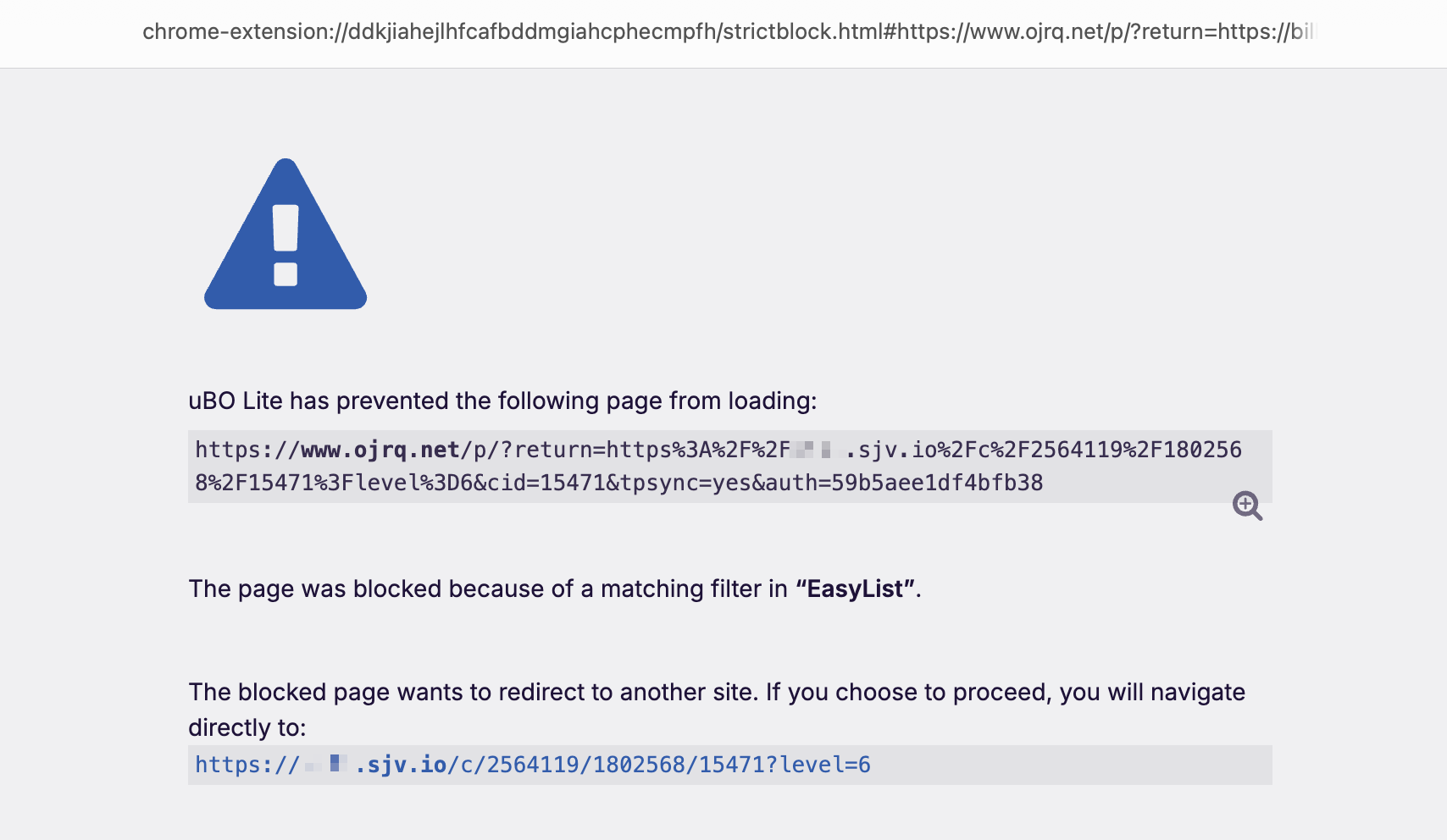
What users sometimes experience when they click on an Impact link due to their redirect hop (outdated technology).
Here is one of our partners still using Impact. They have it "technically" set up in the most direct way that Impact allows for, but you can see that there is a third-party redirect:
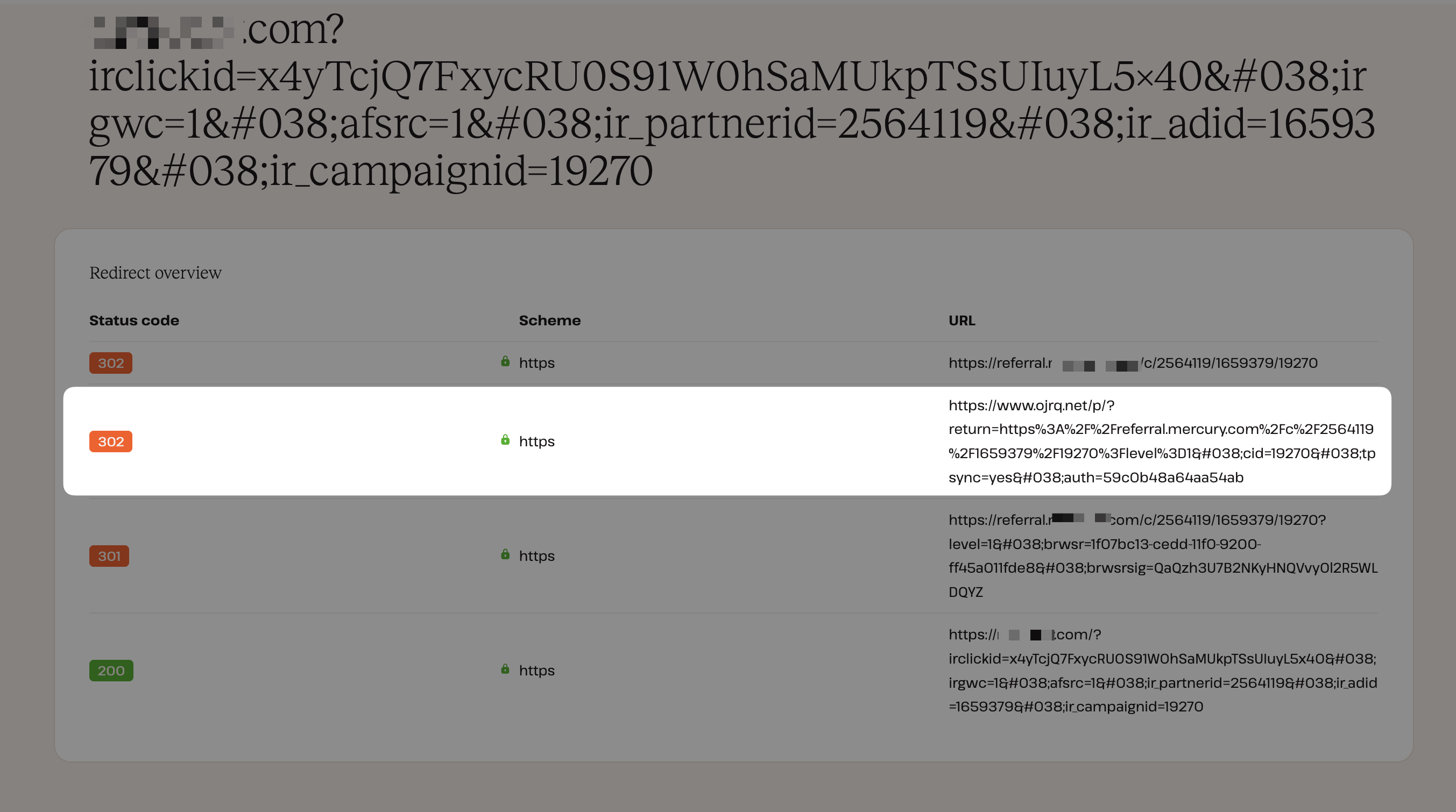
Impact still uses third-party redirect hops, which is often blocked by modern browsers, making it one of the most inaccurate affiliate platforms.
Modern browsers now detect these “tracking hops” and increasingly block or skip them. Sometimes the user sees a blocked-page warning, sometimes nothing appears at all but in both cases, the redirect is stripped out and the tracking never fires.
This means users reach your site normally and can even convert, but Impact never logs the click or the conversion. As a result, attribution becomes unreliable, partners lose credit, and performance data becomes misleading.
We've seen it happen dozens of times: SaaS companies move their program to Impact, and performance is mediocre. And Impact can't fix this. To fix it, they would have to rebuild their entire company from the ground up (they won't do this). So if you use Impact as a SaaS company, you are basically agreeing to work with a dated/broken platform from the start.
Anecdotally, we've had 100+ SaaS partners over the years, and nearly every single one has moved off Impact because of major tracking issues. And because of this, many publishers are refusing to work with Impact anymore.
We've seen countless SaaS companies go through the grueling process of integrating with with Impact (into their payment/accounting software for payouts and everything), only to migrate off them as soon as their contract is up, after realizing that this tool wasn't built for the SaaS market, but rather retrofitted to "make it work".
Instead, we recommend using an affiliate platform that does not engage in these redirect practices. Our top pick is Dub Partners.
Marketplace
MarketplaceImpact oversells its marketplace as a major advantage, but for SaaS companies it rarely delivers real value. The majority of partners inside it are coupon and deal sites...not the creators, consultants, or industry experts that actually move the needle for SaaS.
Impact’s marketplace sounds compelling in theory, but in practice it isn't where the best SaaS partners are. The best SaaS partners are the ones you have a direct relationship with.
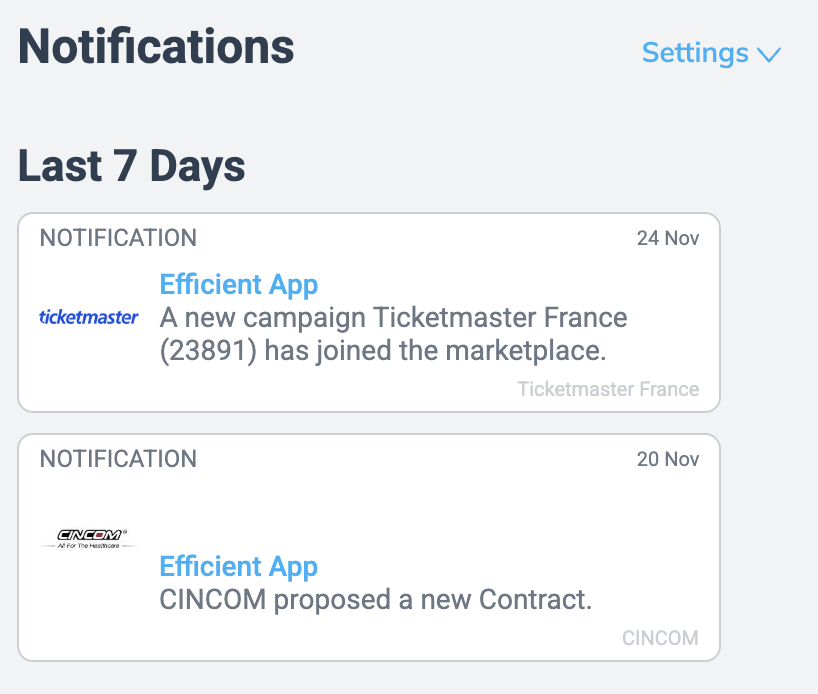
We've ignored every proposal request from Impact. Our best partners actually have a relationship with us directly.
User Experience
User ExperienceThe part that is most baffling is that on one hand, SaaS companies care an extreme amount about their own UI/UX and customer experience, yet all of that goes out the window when it comes to the UI/UX that the referral/partner will be experiencing on their end.
From an actual affiliate perspective, Impact is the single-most platform that we hate working with most. It's so incredibly confusing to just get a straight answer on "how many people clicked links, how many are in trial, and how many subscribed? There's so many filters and toggles and junk that was obviously added for the crazy complex campaigns required for gigantic eCommerce sites:
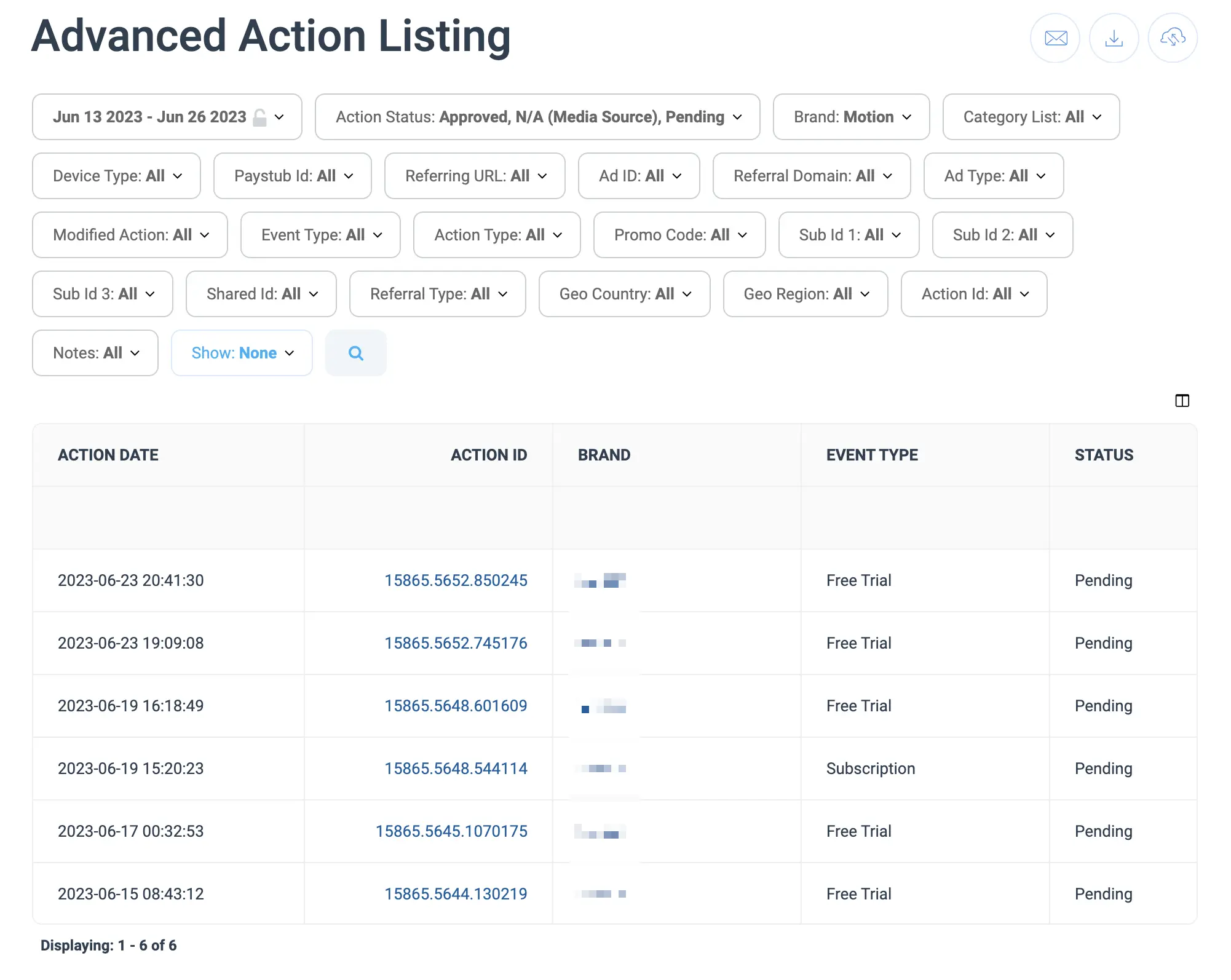
Can someone please explain to me how this is a good user-experience?
Lack of Visibility
Lack of VisibilityOne of the biggest frustrations with Impact is the complete lack of visibility. As a creator or partner, you can't use one consistent link across all your content and see what's actually converting. Instead, Impact forces you to generate separate tracking links for every single placement: website, YouTube description, newsletters, social posts, individual buttons, etc.
This means if you end up wanting visibility you need to manage dozens (sometimes hundreds) of links just to piece together basic insights. And even then, the data is fragmented, hard to compare, and often inaccurate due to blocked third-party re-directs... And guess what? No creator or publisher will go through the trouble to use hundreds of links as it's a nightmare to mange (remember, we are often dealing with hundreds of partners).
Modern platforms like Dub Partners solve this with first-party tracking and content-level attribution, so you always know exactly which pages, videos, or posts drive revenue, without creating thousands of links.
Reputation Damage
Reputation DamageAccuracy = trust = revenue. When Impact's tracking gets blocked, it doesn’t just hurt performance, it creates doubt across your entire partner ecosystem.
Creators stop trusting the numbers, brands lose confidence in the attribution, disputes increase, payouts decrease, and ultimately partners promote you less.
At Efficient App, we avoid logging into Impact whenever possible because the UI is painful, and we consistently see inaccurate tracking (e.g. a friend used our link to sign up and it showed zero attribution).If this happened once, fine, but when it happens repeatedly, it becomes clear that a large portion of campaign performance simply isn't being tracked. And when that happens, we naturally end up creating less content for the brands using Impact as it is incredibly demotivating.
Pricing
PricingThis is also the crazy thing... Impact is one of the most expensive solutions on the market! Again, it's priced for the enterprise B2C eCommerce world. If you're a small SaaS company, you're still going to pay somewhere around $10–30k/yr for Impact. Even if Impact is well within budget, we hope we've shared why it's not worthwhile considering Impact.
The baffling part here is that you can pay less on average and get a fully equipped Partner ecosystem platform like PartnerStack (they even offer discounts if you're early on and haven't raised much yet). Or a simple affiliate tracking solution like FirstPromoter for mid–high 4-figures per year. It just makes no sense on any front to go with Impact.
Final Verdict
Final VerdictMy guess as to why B2B SaaS companies are even considering Impact is because most partner managers (or operations/growth people that are thrown into and affiliate/referral marketing strategy) are just so overwhelmed by all the solutions out there, and don't quite know the distinction between each solution (P.S. we explained the differences in our best affiliate marketing software writeup because it is super confusing until you understand all the terminology).
At the end of the day, if I love your software enough to want to promote it and you send me over to your affiliate program and it happens to be Impact, I'm sorry but you're just not going to get much from us or other larger affiliates/partners. It's just a pain to deal with, and we just don't trust the affiliate tracking capabilities of it at the end of they day. That's what happens when your foundation wasn't built for SaaS companies.
Screenshots
Screenshots
Impact
Can someone please explain to me how this is a good user-experience?
Categories
CategoriesImpact fits into multiple categories based on what it actually helps you do. Each category highlights a different strength and the efficiency points it earned, helping you compare tools not just by features, but by how well they actually perform.
Keep exploring the best software across categories, or explore Impact alternatives