Review Summary
Review SummaryBest For Instagram Posting
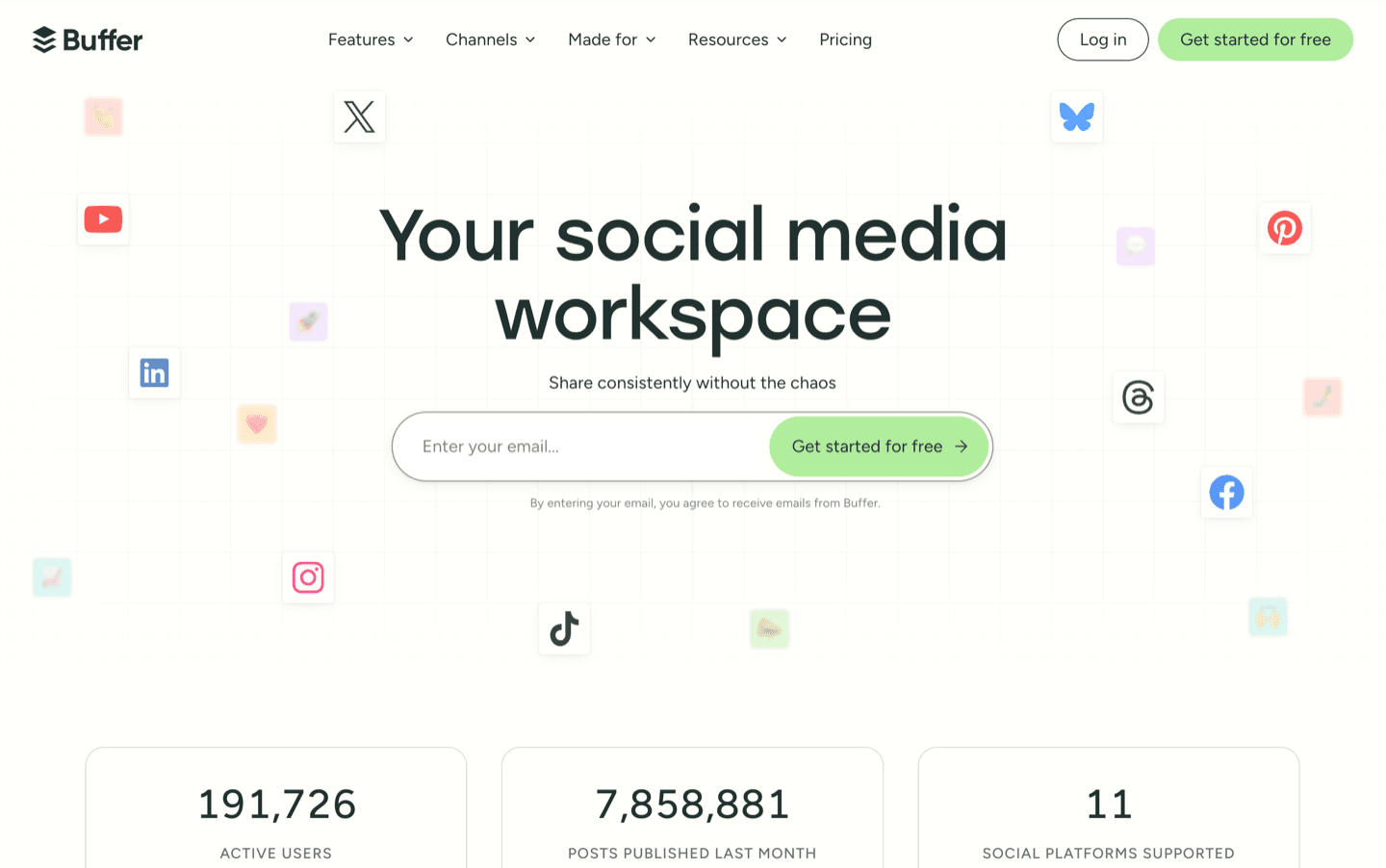
Buffer is the best social media scheduling app for posting to Instagram. It has the best user interface and experience of all the tools we tested, along with being the most reliable. It also has a super generous free tier—one of the best we've seen.
Best Social Media Management Tools 2025: Metricool vs Buffer vs Hootsuite vs Typefully
Best Social Media Management Tools 2025: Metricool vs Buffer vs Hootsuite vs TypefullyBuffer Alternatives
Buffer AlternativesNot sure if Buffer is the right fit for you? Check out these alternatives:
 OrdinalBest
Best social media scheduler for startups & teams
Best social media scheduler for startups & teams
What is Buffer?
What is Buffer?Buffer is a social media scheduling tool that lets you queue and publish content across multiple platforms from one place.
It's been around for over a decade and has a reputation for being the "clean, simple" option in a category where a lot of the tools are focused on adding more and more features for enterprises.
My Experience with Buffer
My Experience with BufferWhen we first started making short-form video content, I was copying the same post into LinkedIn, X, Instagram, and TikTok manually. Everyday, I'd do it first thing in the morning.
Except, the sheer fact of having to open all of those social media tools meant I'd inevitably get sucked into scrolling here and there. Before I knew it, an hour had gone by, and I had a context switching headache.
It was at that point that I decided I needed a social media management tool or my head was going to explode.
When I was looking for that solution, I tested so many tools. Metricool (unreliable and disappointing), Hootsuite (clunky and dated), Later (sketchy customer support and glitches).
Buffer came out as the clear winner.
I ended up using it for about a year to schedule content and really liked it. At the time, it was the most reliable social media scheduler we tested.
Posts went out when they were supposed to, the interface was easy to use, and it never felt like we were fighting the software to get content published.
I love using aesthetically pleasing software with a thoughtful user experience, and Buffer felt modern while the others felt dated.
That said, more recently, I switched our company over to Ordinal. Not because Buffer is bad, but because Ordinal is more for B2B teams and allows us to set up auto-engagement for our LinkedIn and X posts (which is where most of our audience is).
That said, I still recommend Buffer all the time and still think it's one of the best social media scheduling tools available.
Who is Buffer For?
Who is Buffer For?If you're posting to three different platforms and you've found yourself manually copying captions, switching tabs, and trying to remember which version went where, Buffer is for you.
Once I started using Buffer, I'd end up spending an entire afternoon scheduling a month of content. It was nice to get it all organized, and then forget about it.
Buffer gave me a single place to queue, schedule, and publish without logging into each platform every morning.
Buffer is Not Best For
Buffer is Not Best ForIf you're running an agency with multiple clients, this is where I'd pause. Buffer can absolutely handle multiple brands and accounts, but there are limitations.
A friend of mine who runs a social media agency uses Buffer for her own company's content because it's simple and fast.
But for client work, she uses a different platform to keep costs down (she has around 20-25 different channels connected at any given time) and to help her build more complex client permissions and approval workflows.
Also if you need to share campaign results with a client, you might find yourself layering in another tool because Buffer's analytics don't go super deep (unless you use the MCP).
It starts feeling like a scheduling tool that's been stretched into an agency workflow rather than a platform designed for one from the start.
Key Features
Key FeaturesThe Interface
The Interface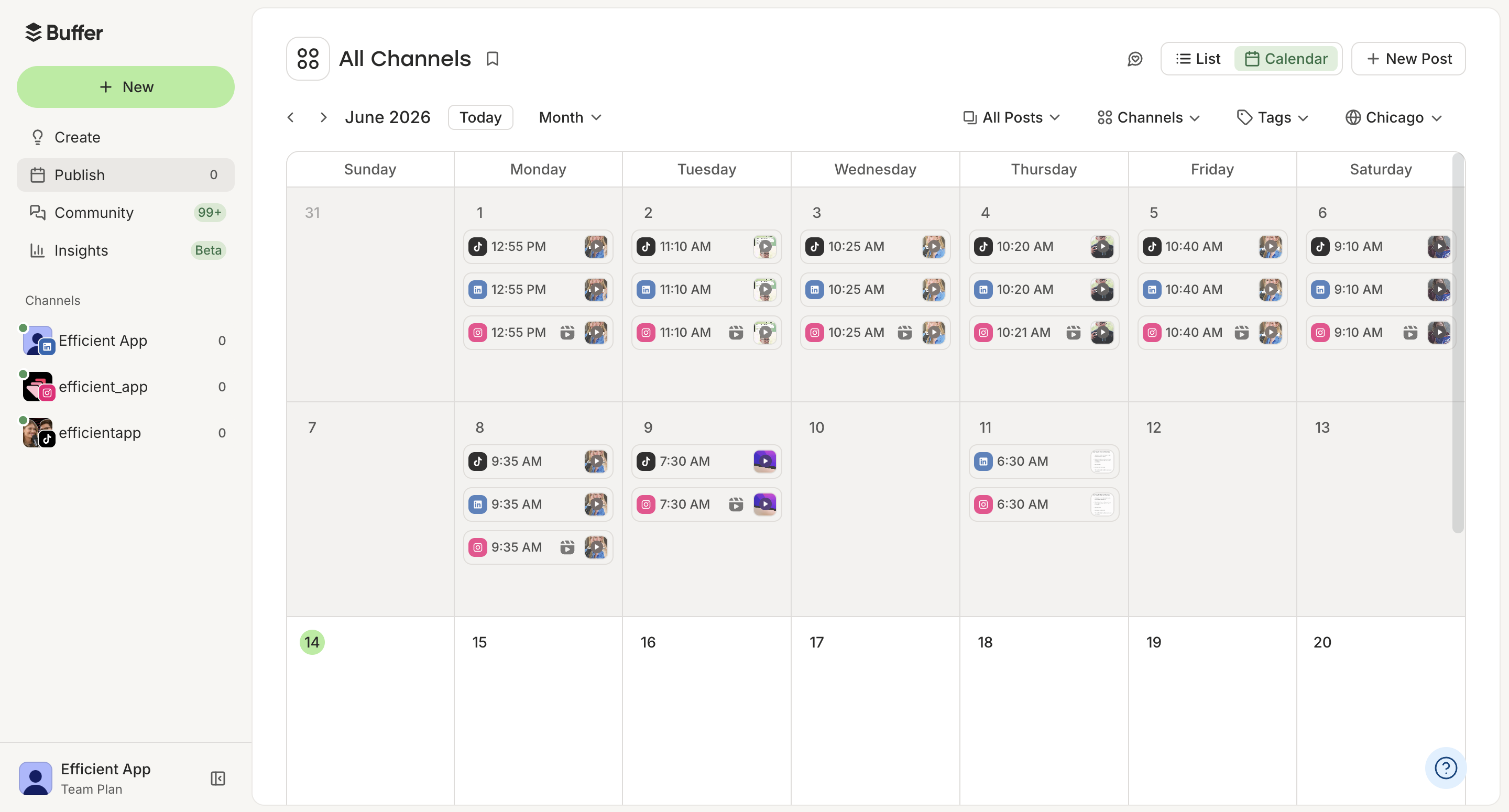
Scheduling & Cross-Platform Posting
Scheduling & Cross-Platform PostingThe biggest reason to use Buffer is that it lets you create a post once and publish it across all your social channels from a single place. I loved not having to open each platform and paste the same content in 3-4 times.
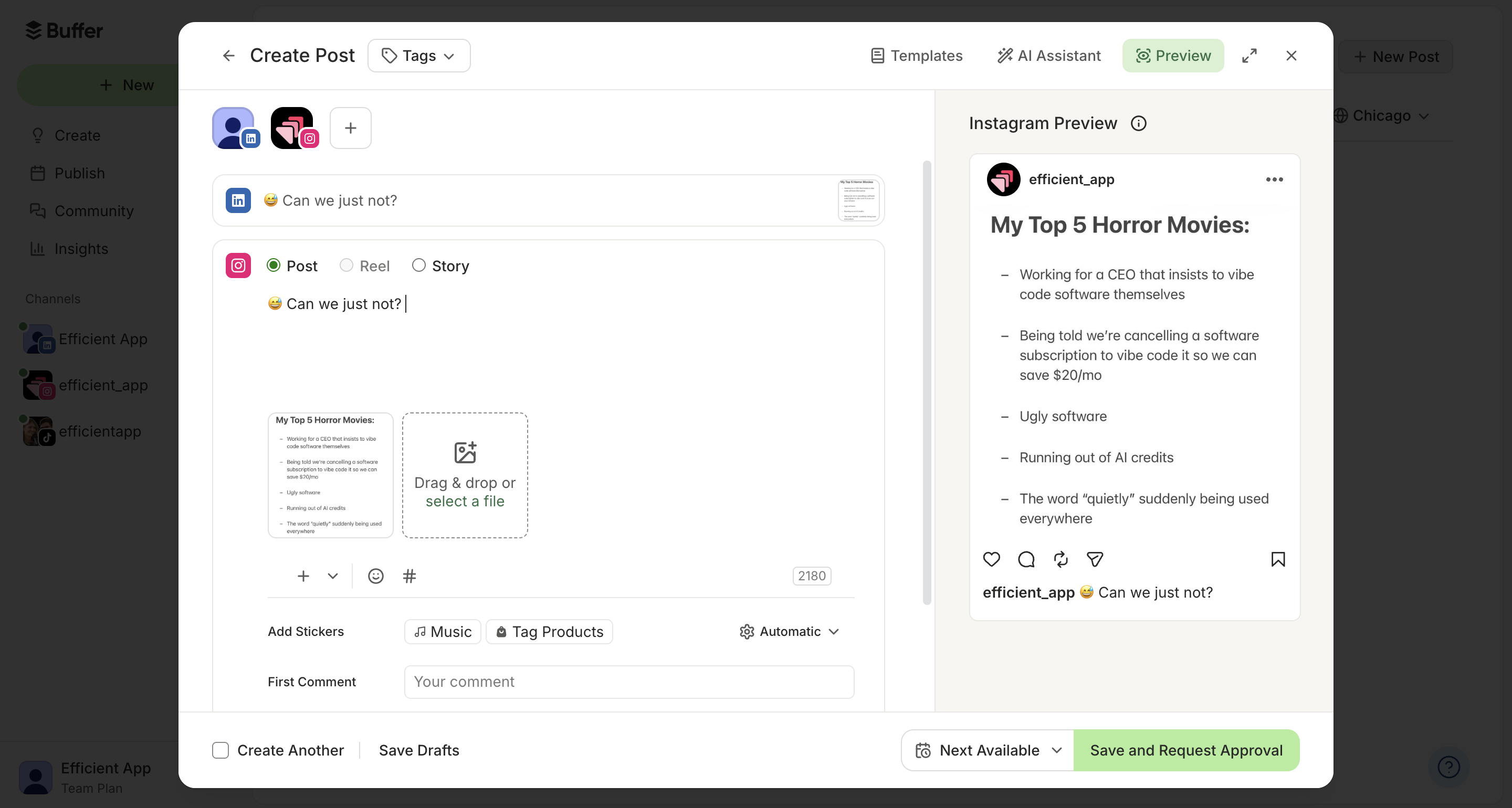
Scheduling is easy and posts actually go out when they're supposed to. That sounds like a low bar until you've dealt with tools that aren’t reliable and require a lot of follow-up (which kind of defeats the purpose of a tool like this, right?).
For example, when I tested Metricool, I kept hitting video file size errors and their team told me I'd need to resize every video before uploading. 🥴 Again, if you’re trying to save time with a scheduling tool, an added step turns into a dealbreaker pretty quickly. I was not about to ask my video editor to re-export a file if I didn't need to.
Buffer didn’t have that issue. The same short video posted seamlessly.
That said, there are some limitations that you should be aware of. These are limitations that are more so because of the API capabilities of the social media platforms. For example, you can schedule YouTube Shorts through Buffer but you can't set a custom thumbnail.
For us, YouTube is the platform we care about most so we never used Buffer for scheduling, and just stuck with posting directly from the YouTube app instead.
Ideas Board + Browser Extension
Ideas Board + Browser ExtensionThis is a feature I didn't expect to care about but ended up using all the time.
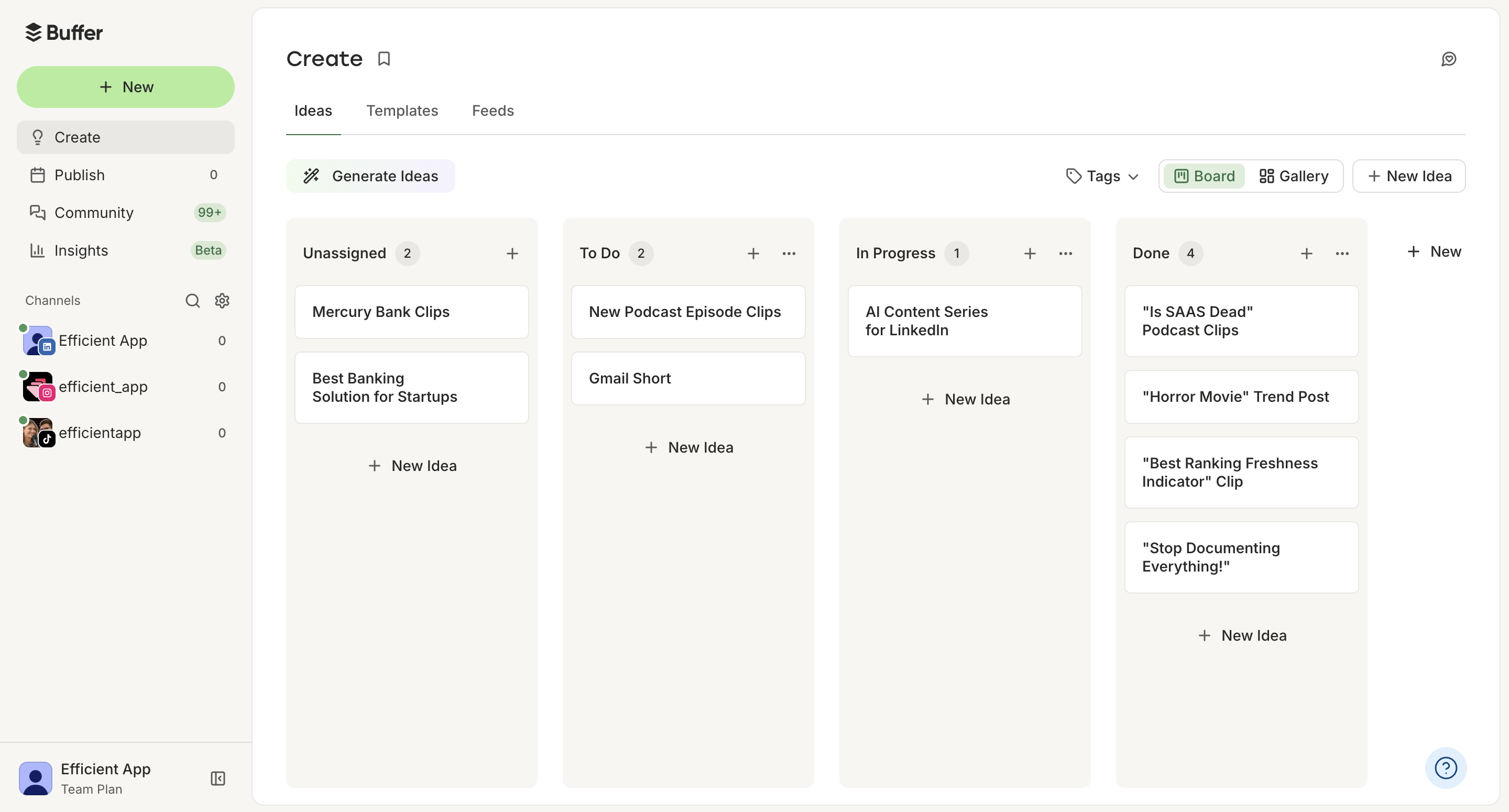
Buffer has a browser extension, so when you're scrolling and come across something that sparks an idea like a format you want to try or a post that caught your eye, you can save it directly to your Ideas board with one click.
Super helpful if you’re constantly saying, "I'll remember this later" (you won't). With this, the idea just goes straight into Buffer, and is waiting for when you do finally sit down to create.
AI Writing Assistant
AI Writing Assistant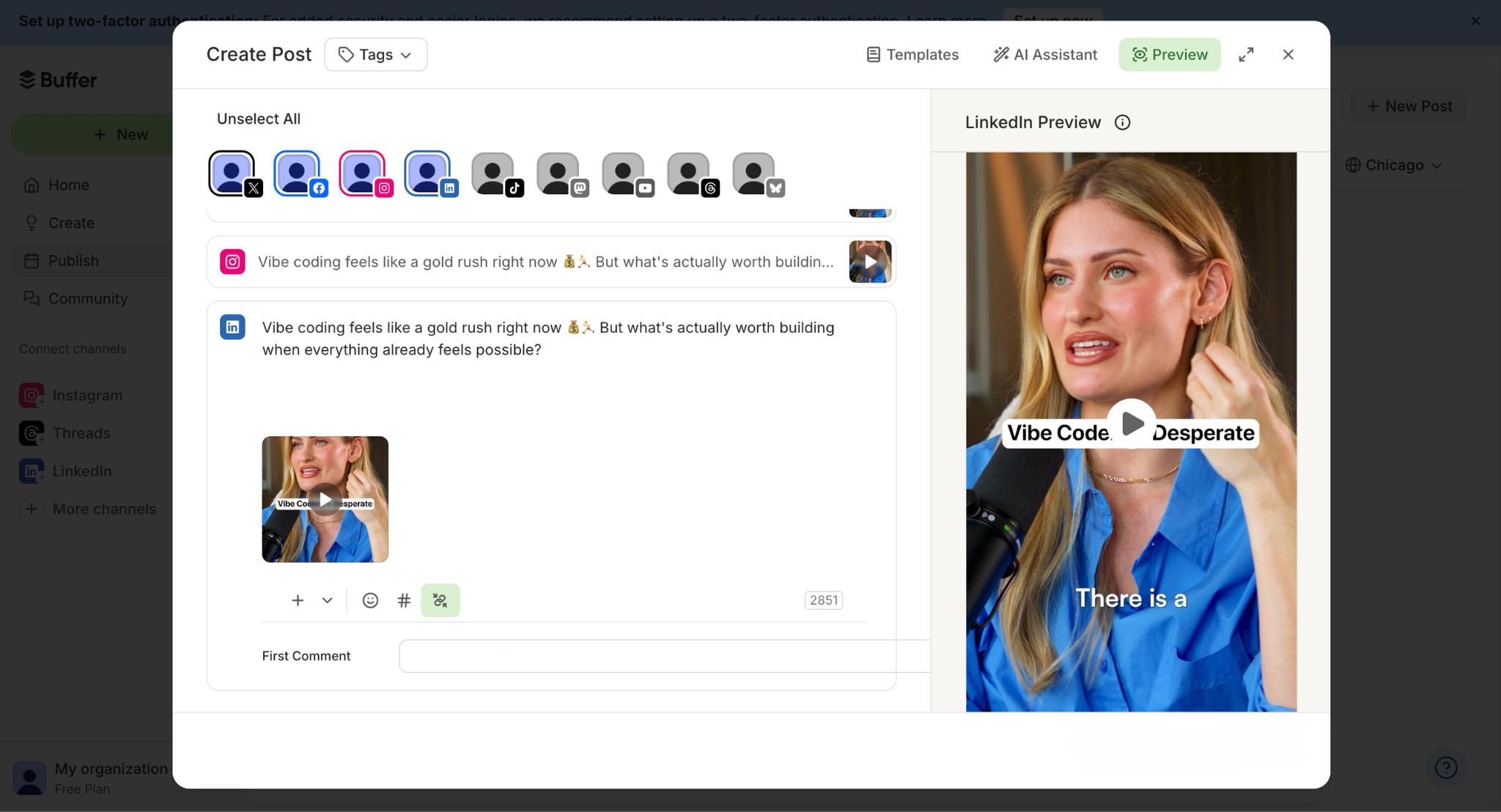
Additional Features
Additional FeaturesMCP Integration
MCP IntegrationBuffer rolled out a native MCP integration, so you can connect it directly to Claude or any AI tool that supports MCP and manage your content with the AI chatbot.
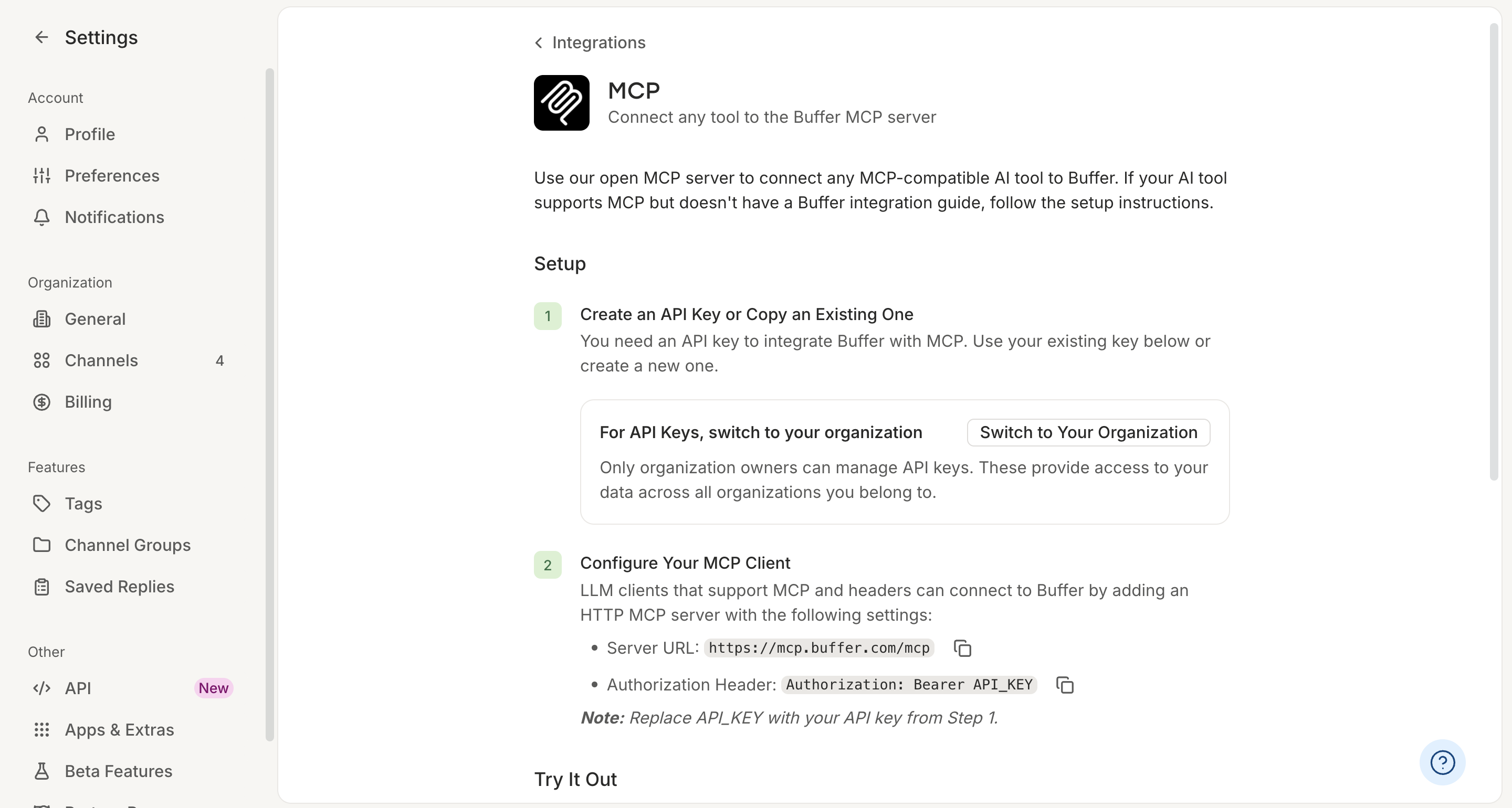
My friend that manages a social media agency says:
"The biggest frustration with using AI assistants for social is always the transfer of content. I might use Claude to get useful ideas, but then I still have to manually move everything into the scheduler, look at what’s already queued, and figure out the best place to drop this new content. The MCP integration removes that step. Claude now just does all that for me."
If you're already living inside Claude or ChatGPT most days, then definitely use the Buffer MCP.
Templates
TemplatesI have to be honest here because I got a little excited and then let down by this one. When I saw that Buffer had templates, I immediately thought I’d finally have a place to save repeatable formats. We published podcast content on a pretty consistent schedule and, most of the time, I use pretty similar caption layout, first comments, hashtag, that sort of thing. Ideally I'd love to have a locked-in structure that I could use as a starting point whenever I’m creating that kind of content.
What Buffer has is actually more like content prompts or a bank of ideas to help you if you're feeling uninspired.
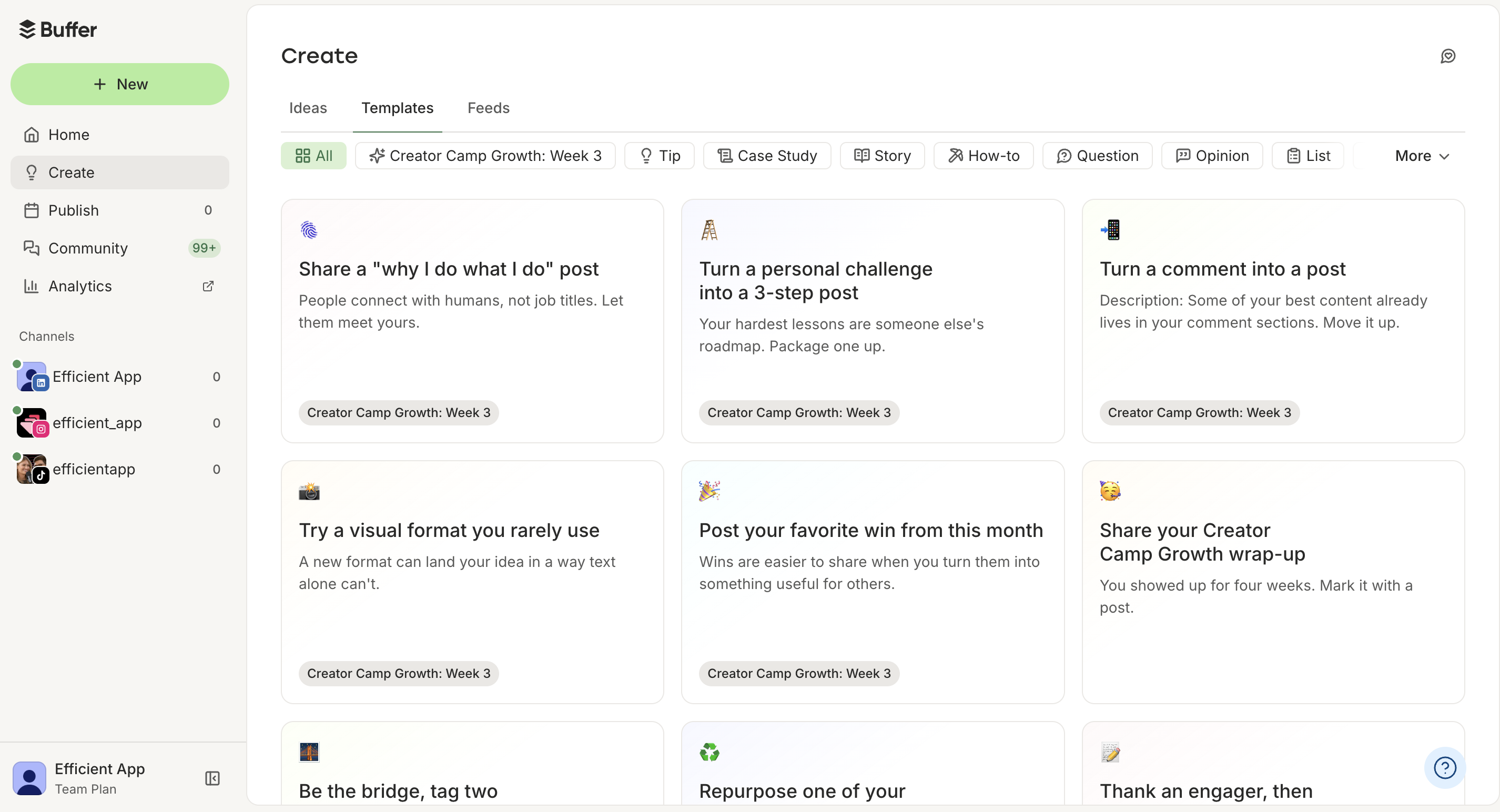
Is this a fun bonus? Sure. But, if you're like me and thinking of templates in the way Notion or Airtable uses that word, i.e. saved structures you can return to, you'll want to reset that expectation now.
One template that wasn't a letdown, though: Buffer's Hashtag Manager. This is super helpful for creating and saving groups of hashtags. Going back to podcast posting, this is exactly the scenario where having saved content is a huge timesaver.
If I'm posting 10 clips from the same episode, chances are I'm using most of the same hashtags for those posts. Hashtag Manager lets you grab and insert those pre-saved groups right into your posts by clicking the # symbol in the composer.
Approvals
ApprovalsBuffer has some approval functionality, but it's less of a workflow and more of a permissions setup.
For example, you can configure things so anything a junior team member creates needs sign-off before it goes out. But you can't really build a step-by-step process where content moves from internal review to client review to final approval or something like that.
Analytics
AnalyticsWith Buffer's free tier analytics, you get the basics: engagement stats for individual posts and follower growth, both over 30 days. For a solo creator checking whether content is landing, that's probably all you really need.
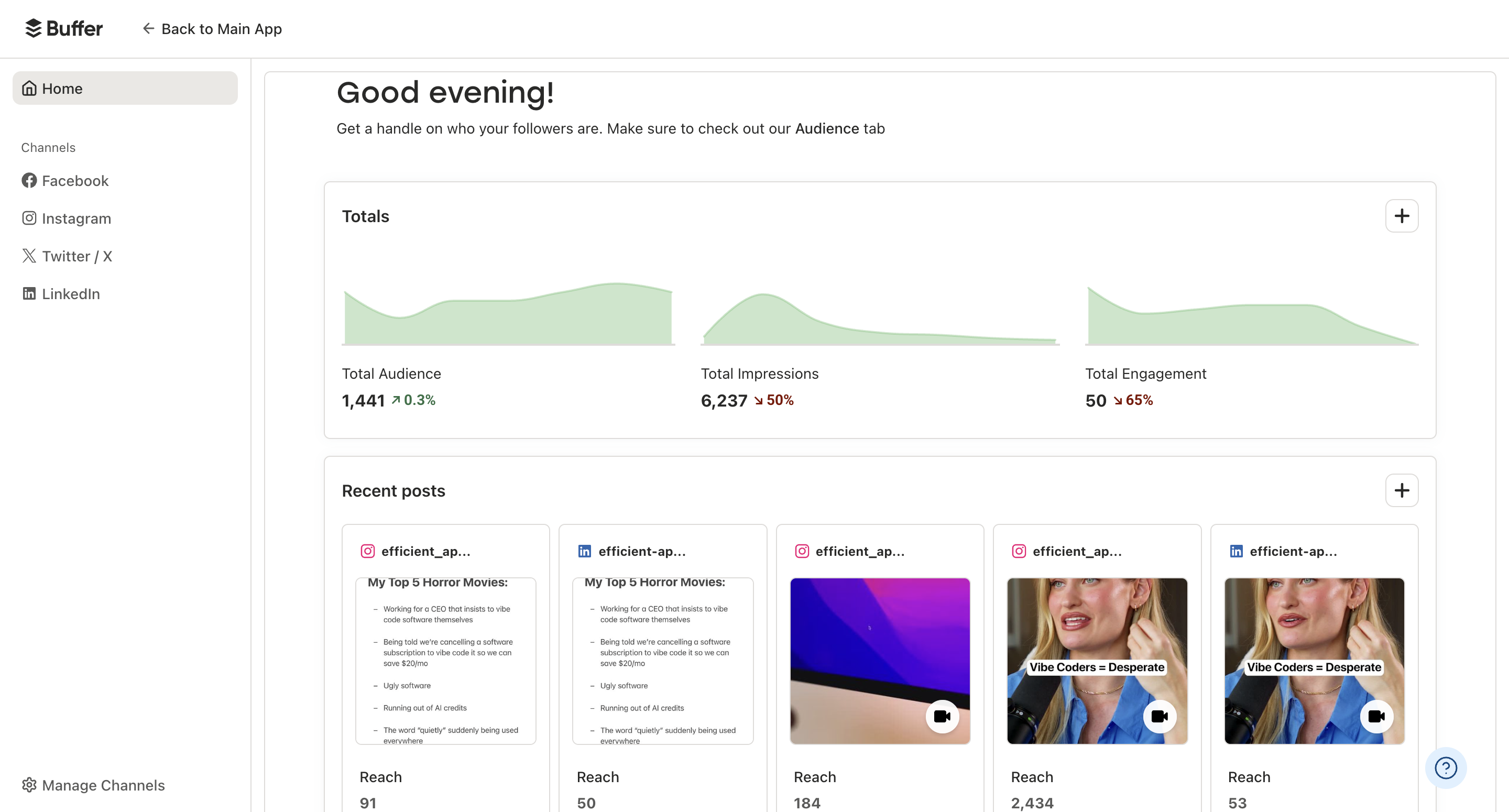
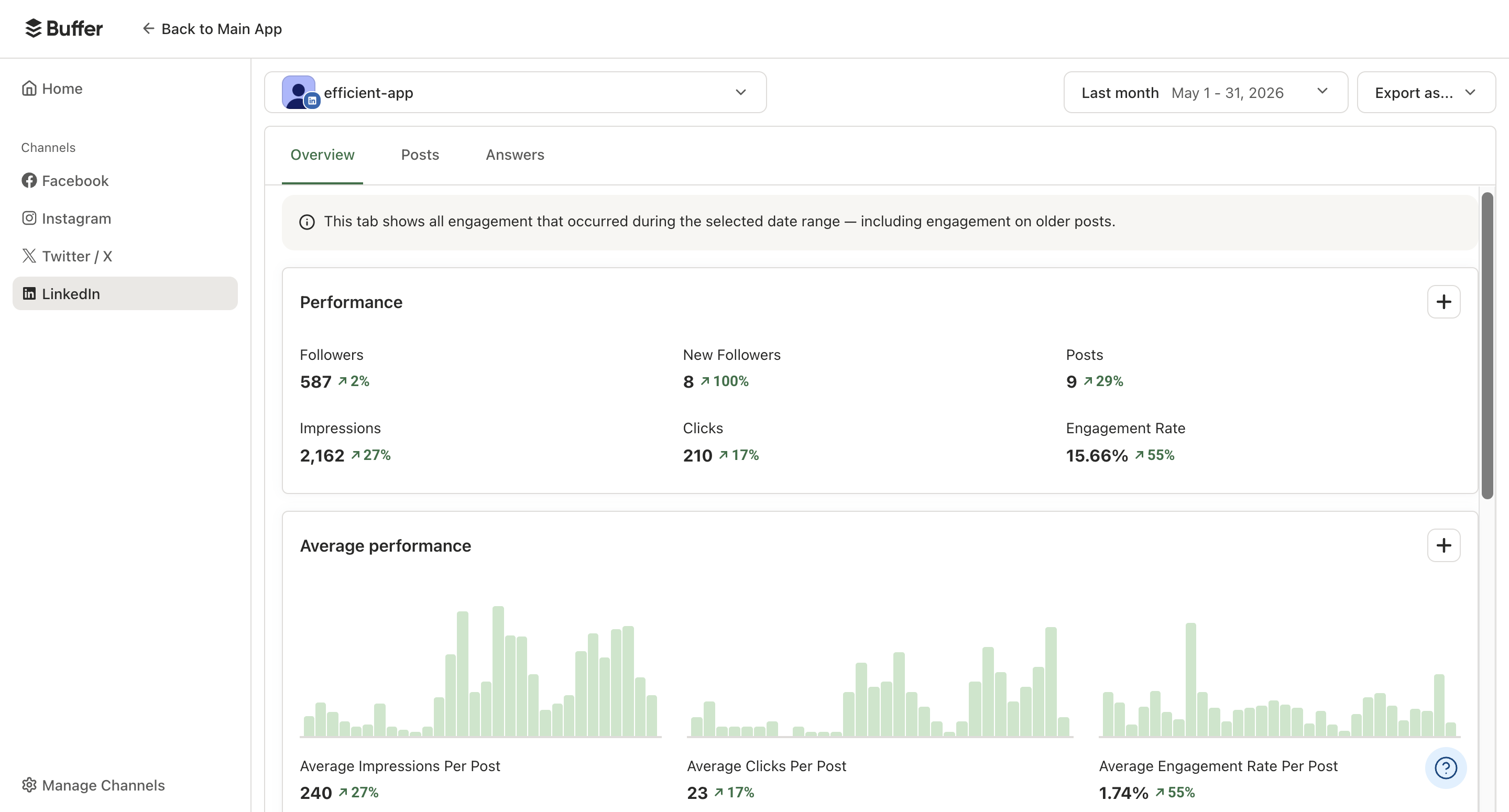
Once you upgrade to a paid plan, you can unlock more in-depth reports with granular statistics, comparisons, and broader date ranges.
Pricing
Pricing- Free: 3 channels, 10 scheduled posts per channel. Best for solo creators or anyone just getting started who wants to test whether a content calendar actually changes their workflow before spending anything. (Note: we did some digging and found that the free plan has a lifetime limit of 8 unique channel connections total, not just 3 active at a time. So if you experiment and connect/disconnect channels over time, you can hit that ceiling faster than you'd expect. I could see this catching people by surprise.)
- Essentials — $6/month per channel ($60/yr): Unlimited scheduling, analytics, and engagement tools. Best for individuals who've outgrown the free tier.
- Team — $12/month per channel ($120/yr): Adds unlimited team members, approval workflows, team notes, and custom permissions. Best for small teams since there are no per-seat fees, just per-channel. Even one other person touching your content makes this tier worth it.
The free tier is genuinely one of the most generous I've seen in this space. I stayed on it longer than I expected before needing to upgrade. For a lot of solo creators, it might be all you need for a while.
Final Verdict
Final VerdictIs Buffer worth it? Yes, if you're a price conscious solo creator or small business.
The interface is simple, cross-platform posting is reliable, the browser extension and Ideas board is a workflow I didn't know I needed, and the MCP integration means it plays well with how a lot of us are already working inside Claude or other AI tools. I stayed on the free plan longer than I expected, which is probably the best compliment I can give it.
Where I'd steer you elsewhere: if you're managing clients, multiple brands, or a larger team. The approval system is basic, analytics aren't especially deep, and agency-style workflows aren't really its strength. That's why I know agencies that use Buffer for their own content but not for client work.
Another case where it might not make sense for you: if you're focusing heavily on B2B content and mostly care about posting on LinkedIn or X. After about a year on Buffer, I switched to Ordinal because it's very clearly designed around posting on these platforms specifically, and it gave us better control over team engagement and post distribution.
But if you're not there yet? Start with Buffer. You'll know pretty quickly if it fits, and if you outgrow it, you know where to go next.
Screenshots
Screenshots

Buffer
Categories
CategoriesBuffer fits into multiple categories based on what it actually helps you do. Each category highlights a different strength and the efficiency points it earned, helping you compare tools not just by features, but by how well they actually perform.
Keep exploring the best software across categories, or explore Buffer alternatives
FAQ
FAQDoes Buffer Have a Free Plan?
Does Buffer Have a Free Plan?Yes, in-fact it has one of the most generous free tiers that we've seen of all the best social media management tools on the market.
It allows you to connect up-to 3 channels (e.g. X, LinkedIn, and Instagram) with the ability to schedule 10 posts per channel, allowing for 30 total posts on the free tier (assuming you've connected 3 accounts).