Comparison Summary
Comparison SummaryMercury is an actual banking solution first and foremost while Brex is an expense management tool that added banking as an add-on feature. It works, but it’s clunkier, and more limited than Mercury.
Business Banking
Business Banking MercuryBest
Best modern bank for SMB's and startup founders
Best modern bank for SMB's and startup founders Brex
BrexFor startups using Capital One as their business bank
For startups using Capital One as their business bank
Expense Management
Expense ManagementBilling & Invoicing
Billing & InvoicingComparison Videos
Comparison VideosWhy We Switched to Mercury (After Testing Every Business Bank)
Why We Switched to Mercury (After Testing Every Business Bank) 8:47
8:47Why We Switched to Mercury (After Testing Every Business Bank)
Why We Switched to Mercury (After Testing Every Business Bank) 2:42
2:42Best Business Bank Accounts: Mercury vs Brex vs Novo vs Relay
Best Business Bank Accounts: Mercury vs Brex vs Novo vs RelayEditor's Verdict
Editor's VerdictSafety & Protection
Safety & ProtectionMercury stands out on safety and protection. You get real control over ACH pulls, so nothing leaves your account without your explicit approval, and suspicious activity gets flagged before any money moves. That's a huge step up from Brex, where controls are more basic and feel like an afterthought.
Both offer multi-bank FDIC insurance, but Mercury's sweep network automatically spreads your funds across partner banks, so you don't have to worry about coverage limits or a single bank going under. Brex technically covers up to $6M via partner banks, but the whole setup feels less focused, and there's real uncertainty given the Capital One acquisition.
If you care most about safety and knowing your money can't be moved without your say, Mercury is the clear pick. Brex is fine for basic protection, but Mercury actually makes you feel in control and covered, especially when things go sideways.
Earning Interest
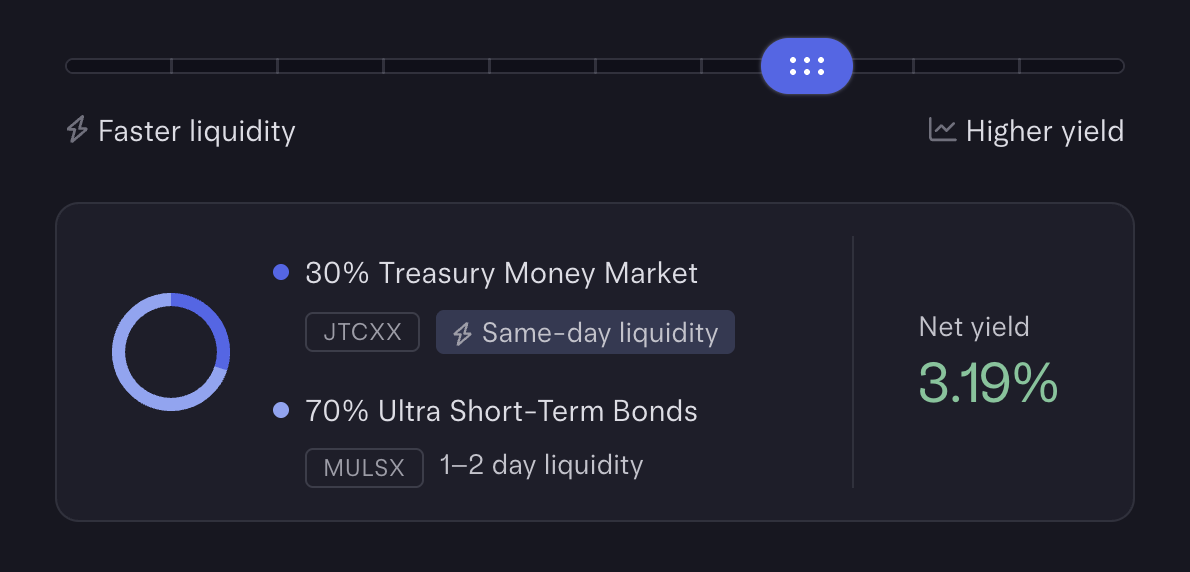
Earning InterestMercury Bank gives you way more control and flexibility when it comes to earning interest on your idle cash. You can set up automatic transfer rules, split your money between more liquid and higher-yield treasury options, and treat the whole setup like a savings account with same-day access to funds if you need them. It's all built right into the core experience, so it just works for moving money around and optimizing returns without extra hassle.
Brex only offers a single default money market fund and the whole interest-earning feature feels like an afterthought. You can move money in and out without much trouble, but you're locked into that one basic option and there's none of the automation or tiered flexibility Mercury has.
If earning the most interest with minimal effort and maximum access to your funds matters, Mercury is the clear choice. Brex is fine if you just want something simple, but it's not nearly as strong or seamless for this.
Money Movement
Money MovementMercury comes out ahead in this category. Everything from onboarding vendors to collecting tax info and sending payments is built-in and actually feels like it was designed for banking, not tacked on as an afterthought. Mercury handles the admin work, pulls in vendor details automatically, tracks W-9s, and even makes 1099 filing easier. Checks are painless too, they print and mail them for you with attachments, so you don't have to mess with anything.
Brex technically checks the boxes with ACH, wires, secure vendor onboarding, and invoice uploads, but the whole thing feels clunky and secondary. If you're using newer AI accounting tools, the gaps get even more painful since integrations are missing where they matter. Compared to Mercury, Brex just feels old and awkward.
If you want smooth, reliable money movement and you care about not getting bogged down in admin, Mercury is the clear pick. Only choose Brex if you're already locked into their ecosystem and don't care about a polished banking experience. For everyone else, it's Mercury by a mile.
Organization & Controls
Organization & ControlsMercury is much better at organizing and controlling your money. Mercury lets you open up to 100 checking and 100 savings accounts per business, each with its own card, and you can automate transfers with super flexible, custom rules (like automatically splitting deposits into percentages for taxes, payroll, whatever you want). Setting this up is quick and smooth, so you're never fighting the system to keep your accounts organized.
Brex gives you a ton of separate checking accounts too, but you can't get a card for each one, and the auto-transfer rules are much more limited. You can only keep a target balance, not slice up incoming money by percentages to different buckets. Plus, Brex only supports one legal entity per login, so if you have multiple businesses or want personal accounts, you're out of luck. Mercury, on the other hand, lets you manage multiple businesses and even personal accounts all under one login, which is a huge deal if you want everything in one place.
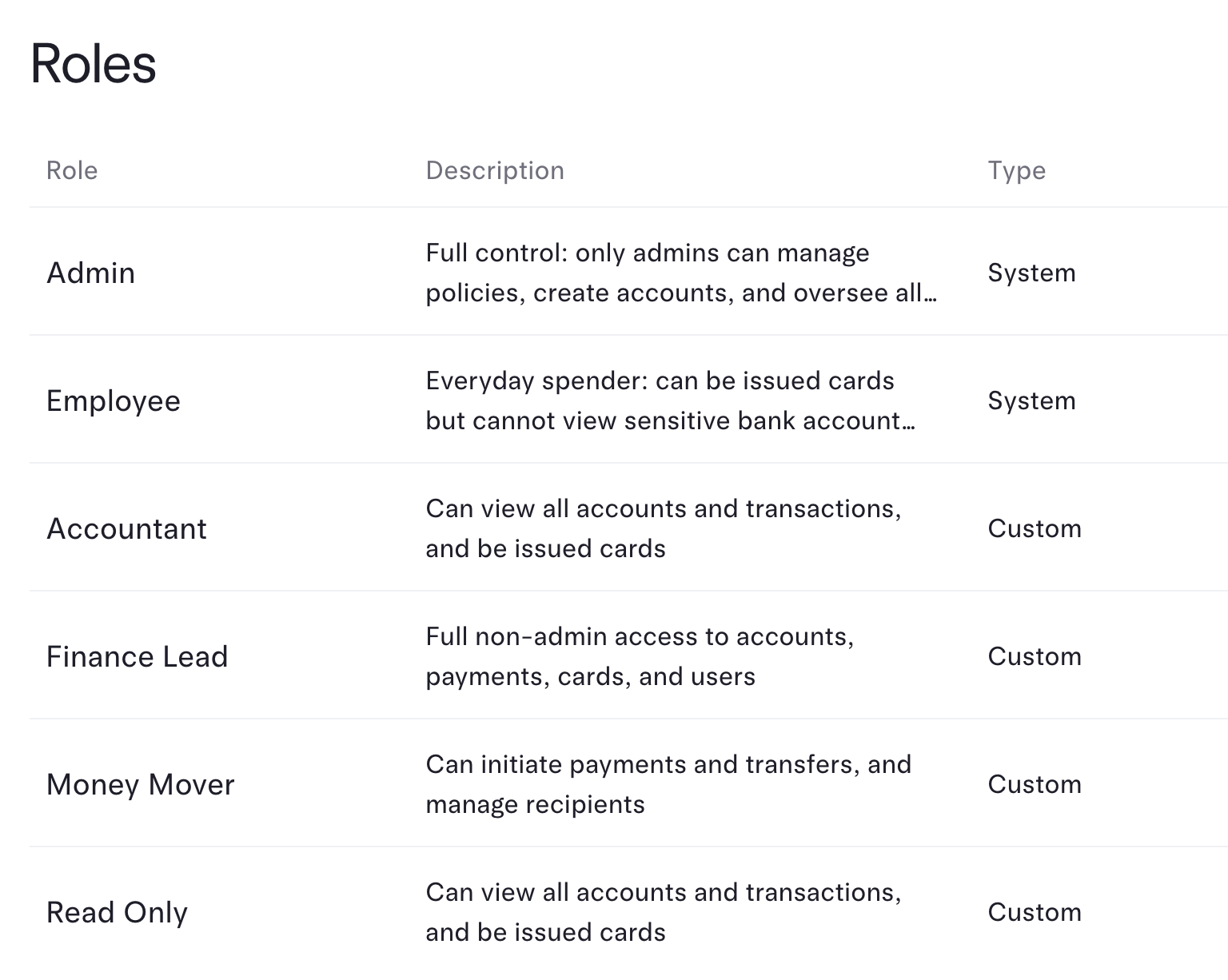
Both apps have solid user roles and approval controls, but Mercury's setup is just more streamlined and flexible, including things like dual admin approvals and easy toggling for who can move money.
If organizing funds across accounts and controlling money flow is your priority, Mercury is way ahead. Brex has some strengths, especially for finance-team-heavy companies, but for sheer control and ease, Mercury is the clear pick.
User Experience
User ExperienceMercury Bank is on a completely different level for user experience. Its interface feels modern, intuitive, and just works smoothly from the moment you log in. People actually rave about how easy and pleasant it is, and once you use it, you won't want to leave.
Brex just doesn't have that focus. The banking side feels like an add-on, not the main event. Even basic tasks like figuring out where your money is can feel messy, because cash is split across different sections and you have to dig around.
If you care about speed, clarity, and just having a banking interface that feels like it was built for you, Mercury is the obvious pick. Brex is fine if you're there for spend management, but for actual banking, it's not even close.
Screenshots
Screenshots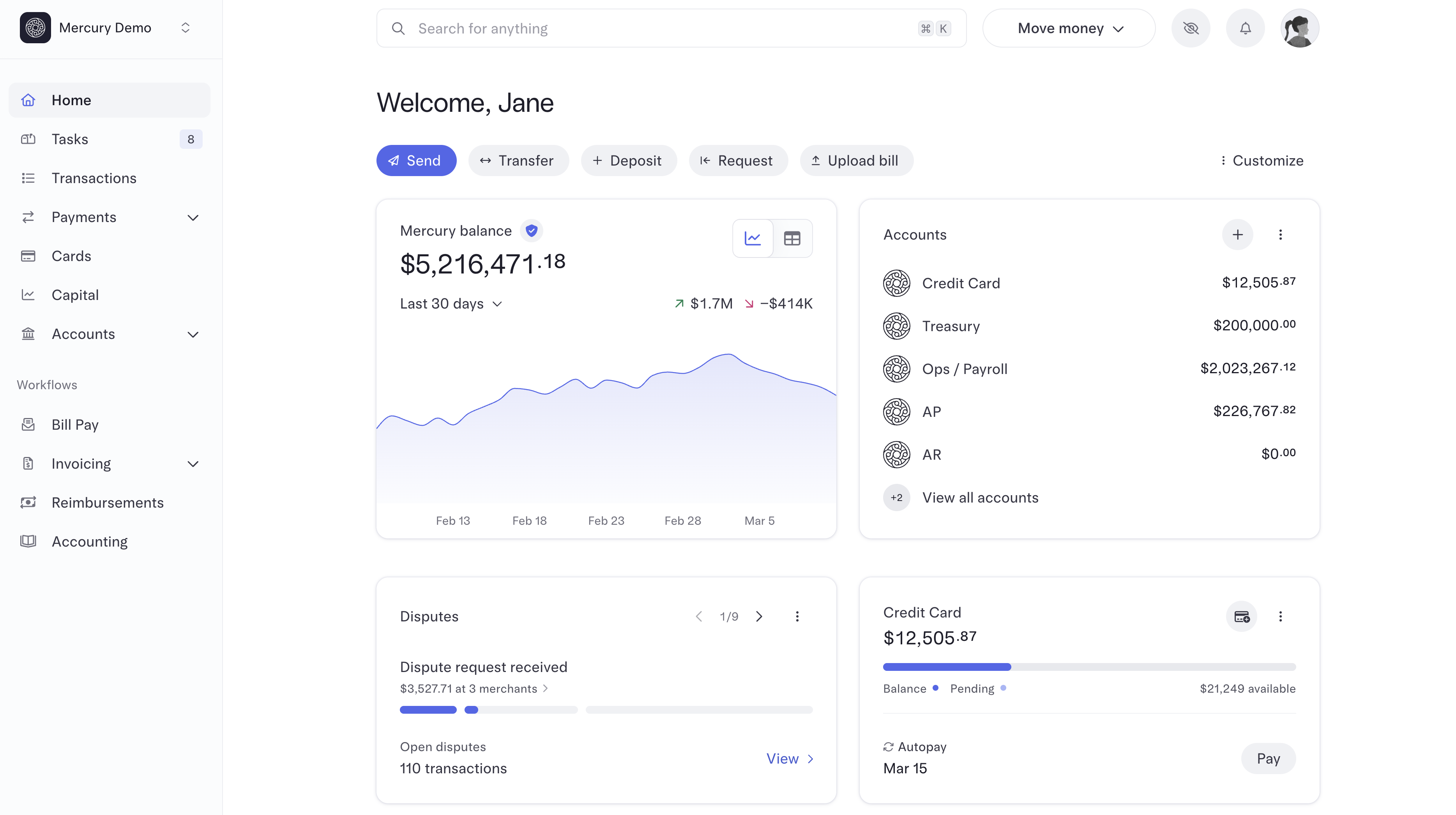

Mercury