We believe there are better options available in this category, read below to learn what this software does well, and what they could do better. ⤵
.webp)
.webp)
.webp)
.webp)
.webp)

A browser for agentic search by Perplexity.
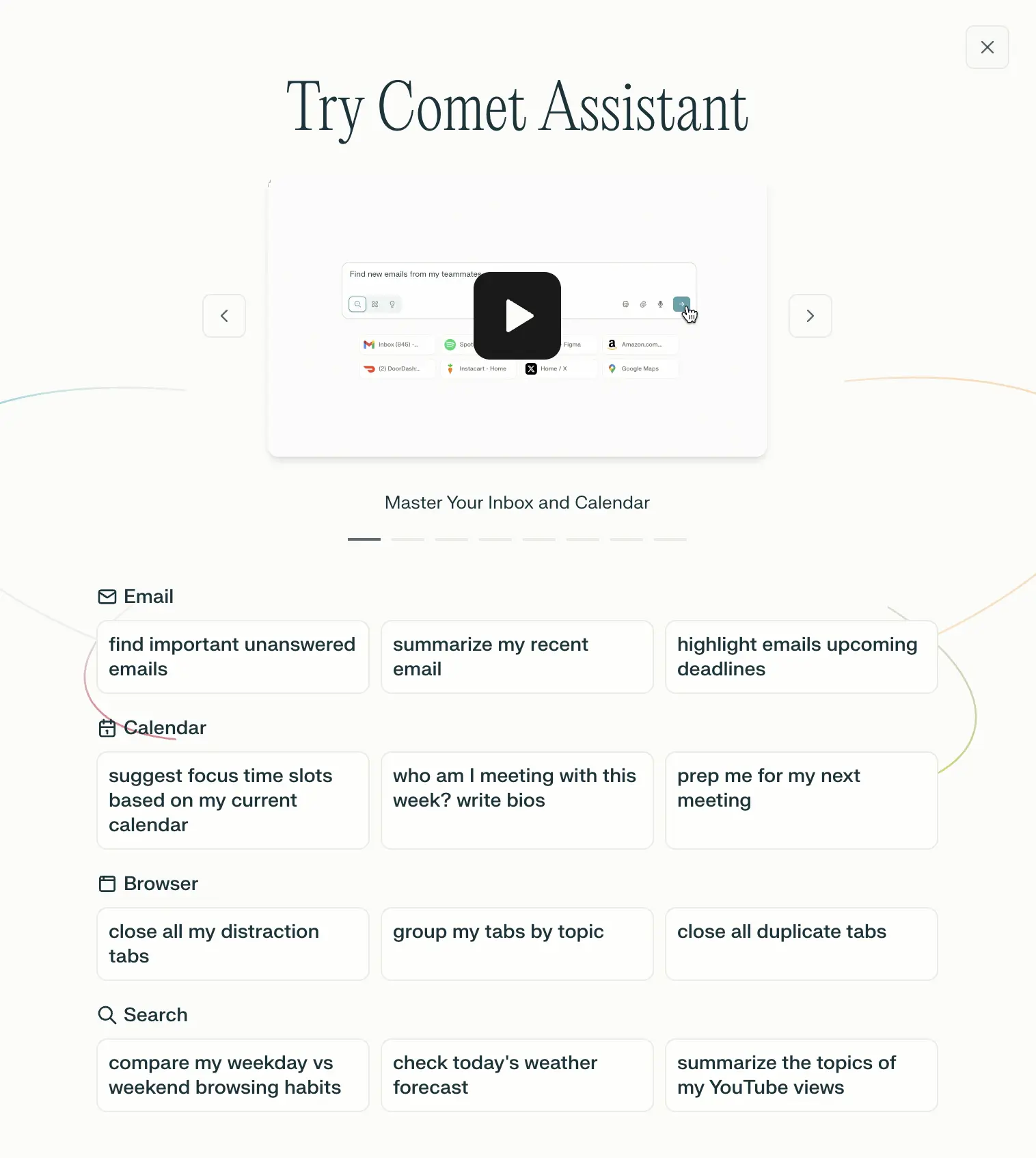
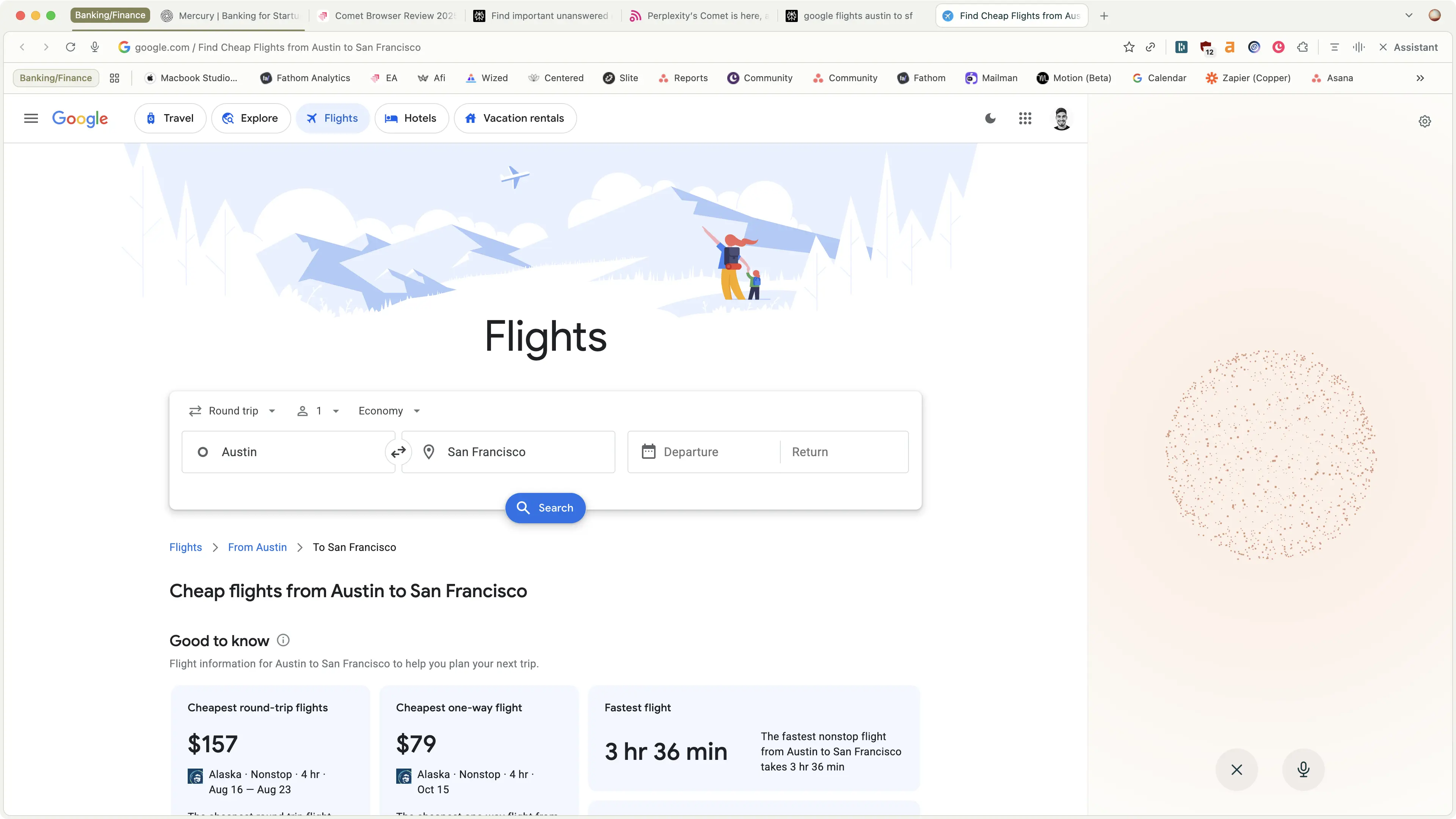
Comet Browser is an AI-native browser created by the team over at Perplexity, who has been shaking up the search space. The main differentiator with Comet is that their Comet Assistant is at the core, which gives us a taste of what's coming with the coined term "Agentic Browsing". All that really means is that the assistant not only searches with more context and interacts with your tabs, but it actually clicks around the web for you.
Out of all the AI browsers, I trust Comet the most for deep research where I actually need factual information. The reason is because Comet is the most connected to the internet and it gives you clear citations of where it gets it's information from (while ChatGPT can make things up sometimes). So if I am looking for facts, data, sources, I always open up Comet.
Not to mention, I love Comet's Android browser. I can actually use the AI Assistant on mobile, it can look for promo codes (so I can finally shop on my phone), and agent mode works on the phone too 🤯 It has immediately become my main browser on my phone. It's not available for iOS yet, only Android.

Comet Browser’s agent mode is completely free, unlike other AI browsers where you need to be on a paid plan to unlock agent capabilities so even if it doesn't become your one and only browser, it's incredibly handy to have on your devices (click here to grab it).
Comet's built-in assistant is what sets it apart from all the best browsers we've covered. It handles the new table-stakes well, with Perplexity at the core, so all the usual search and research functionality is handled.
It can also interact with open tabs, allowing you to essentially target your search and research to a more specific dataset to what you're looking into. But Dia can do this as well, so it's not particularly standout in a browser.
But what does set it apart is Comet gives us the first actual glance at what this coveted "Agentic Browsing" experience actually is, in a non-technical, actually user-friendly way.
What does this mean? Well it can connect into your calendar and email to tell you about important emails (cool, like Google Assistant, right?), but most impressively it can even navigate the web for you.
I'm saying that you can ask it to do things, and it will actually navigate around the page your on, open new pages when needed, and take action as if it's a human you're asking to do something for you.

With all of that said, moving into the browser space is incredibly difficult, but there is something incredibly interesting about this new wave of AI browsers, and we're totally here for the browser space to finally evolve.
.webp)
.webp)
.webp)
.webp)
.webp)

The battery optimized browser built by Apple.
This is the default browser that comes with mac devices, and has existed for over a decade.
With Safari, you're not going to get anything too cutting-edge or innovative, because they, like Google Chrome are focused on stability for their 1+ billion users.
For a further breakdown in understanding the negatives that come with browsers that have hit major scale, refer to our Chrome vs Safari comparison.
Since Apple is a hardware company at the end of the day, the whole point of Safari is that you're going to get a great cohesive experience if you're using all Apple products (Mac + iPad + iPhone).
The largest benefit to be had here, in our eyes, comes from Apple owning both the hardware and software layers. This allows them to go above and beyond with optimizations like battery life and cross-device syncing.
While they have baked in password management
We don't really see much major innovation or differentiation coming to Safari though. Why? Because this isn't Apple's core business. Not only that, but Apple has zero interest in going after the B2B and collaborative browser space. When comparing Arc Browser vs Safari, you'll see first-hand that Arc has a lot more going on in the features and differentiation space as they ultimately want to be the browser for teams and collaboration.
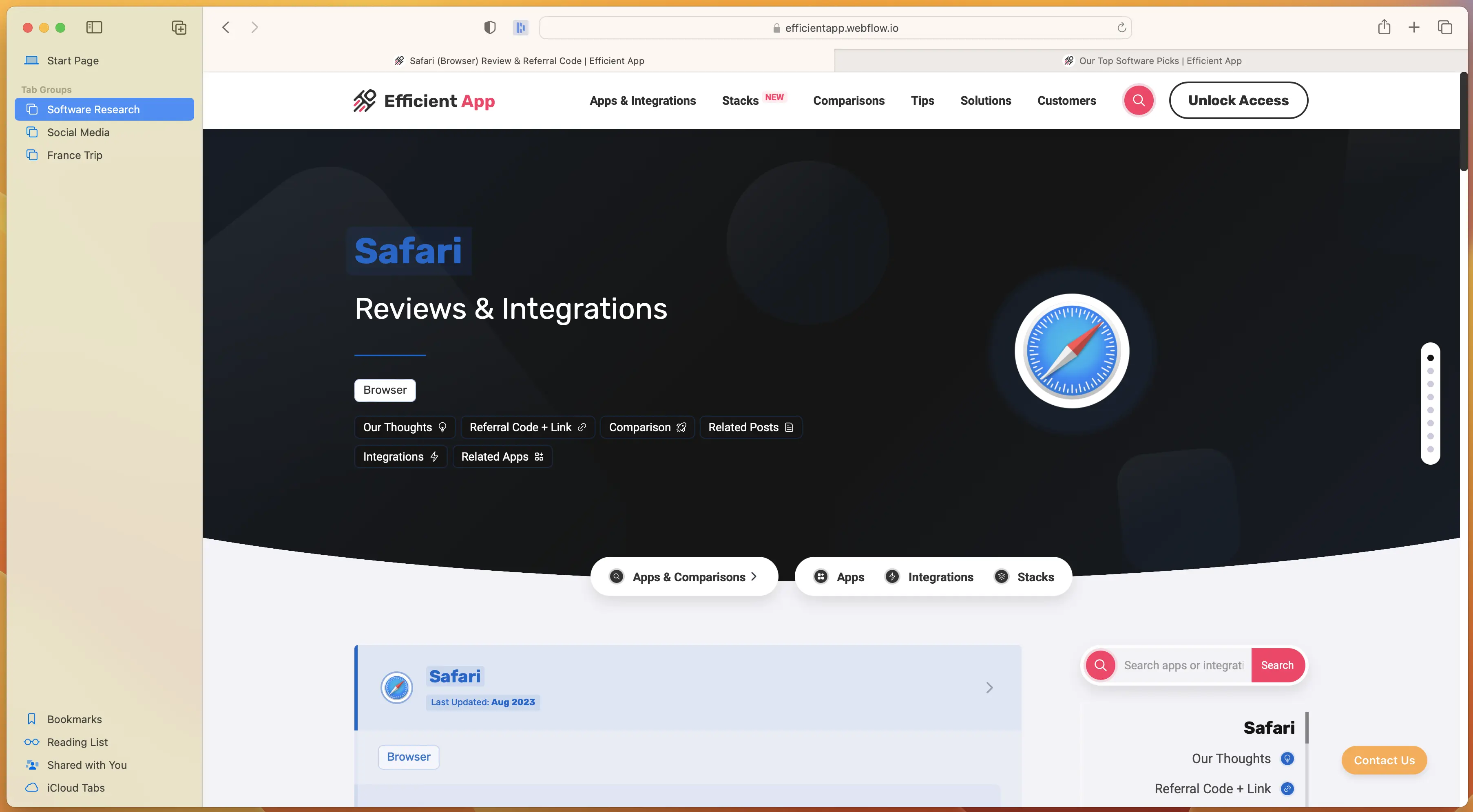
We do applaud Apple for adding tab groups, and allowing for them to be on the side of the browser window. There's some small similarities when comparing Safari vs Brave in the recently released sidebar tab management in Brave and Arc.
With Safari, you get a familiar and safe UI. It looks like a browser, it looks pretty much the same as it has the past decade, and it's relatively bland in terms of how it looks.

There's just not much to mention here, but the truth of the matter is some of this is by design. Their focus is to be stable, functional, and to let the content of the website you're currently on, shine.
This is where we can give Apple some props on the user-experience, if of course you're also using other Apple products. Take for example you visit a website on your iPhone, you get a prompt in your MacOS dock that shows a website was just opened on mobile. Want to open it up on your desktop? Simply click the Safari icon in your software dock.
In actually using the browser though, there's nothing in particular that stands out as an exceptional UX. This category in particular is where Arc shines. They have the smallest UX details, that just makes using the browser on the day-to-day so incredibly enjoyable.
Are you a huge Apple fan? Do you only care about getting the best possible battery performance on your MacBook and nothing else matters to you? Do you absolutely despise change? If so, Safari is probably fine for you.
If you're on the other hand sort of bored when looking at the existing browser market and wish you could get a bit more enjoyment and productivity out of your browser, then that's where you should definitely be giving Arc a shot.
Genuinely, give Arc a shot for a week straight as your daily driver, and I'm willing to bet you that you never come back to Safari again.
Arc Browser is genuinely what Apple could have made, had they re-thought the browser from the ground up, without all the baggage that currently exists with Safari. And for that reason, that's why we rank Arc at the top of our best browser apps list. Genuinely wouldn't be surprised if Apple one day acquired Arc and replaced it with Safari as the default browser for MacOS.
.webp)
.webp)
.webp)
.webp)
.webp)